
“Who are you, and what do you know?”
These are the questions many immigrant physicians are immediately confronted with when they arrive in the United States, says historian of medicine Eram Alam. In her new book, The Care of Foreigners: How Immigrant Physicians Changed US Healthcare, the Harvard associate professor examines the American health care system’s disproportionate reliance on doctors from Asia — especially India and Pakistan — as well as the unsettling scrutiny that these doctors face.
With rates of chronic illness, the number of older adults, and physician burnout and retirement all increasing, the American Medical Association has projected a shortage of 87,000 physicians in the next decade. Yet the Trump administration has responded by rolling out increased vetting and increased fees for H1-B visa applicants. That’s putting foreign medical professionals — and the rural communities that are particularly dependent upon their care — under even more pressure.
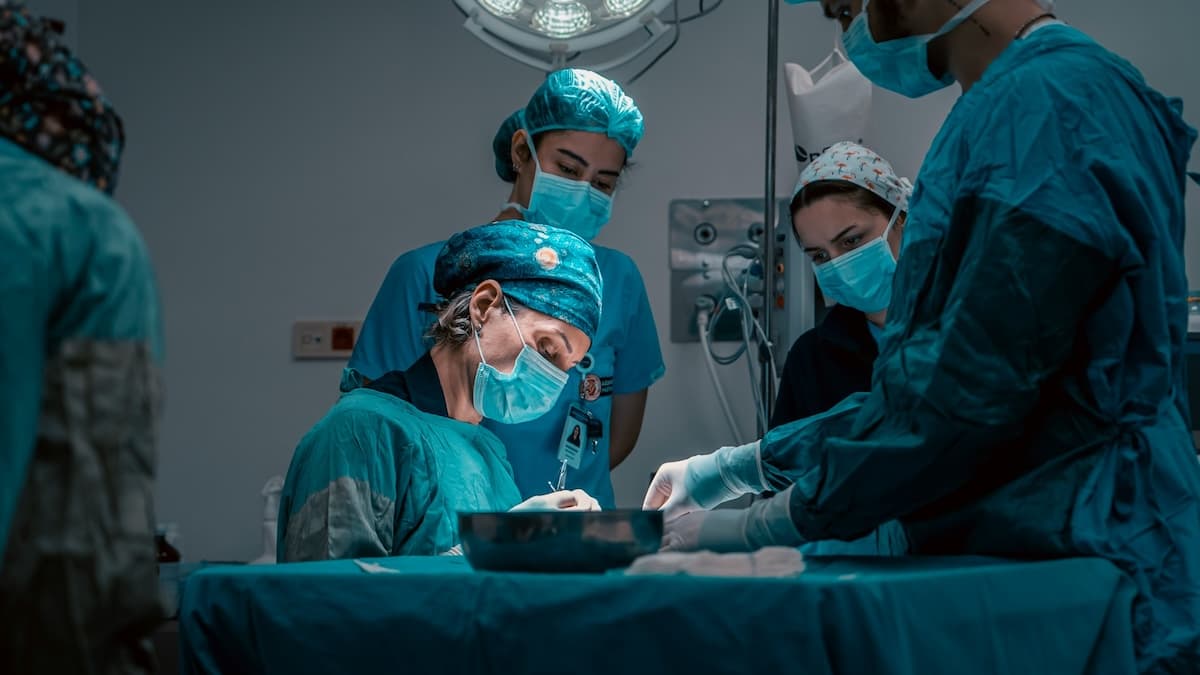
Alam’s research examines the forces that have shaped the physician workforce in the United States and shares the exceptional experiences of immigrant physicians. Drawing on historical legislation and political addresses, archival materials, scholarly works and firsthand interviews with clinicians, Alam paints a detailed portrait of the immigrant population whose work shapes the backbone of the American health care system.
Alam spoke to Analyst News about the country’s labor distribution problem, the downstream effects of the Trump administration’s anti-immigration policies on rural health care, and more. This interview has been edited for length and clarity.
What inspired you to write this book?
Growing up, many people assumed that because I was South Asian, I was in the medical field. That was something that sat in the back of my head, and I never really thought too much about it until I started doing my PhD research. I was interested in health disparities and started asking this question: Who’s actually providing care? There’s little written about immigrant physicians, even though these are the people who are often providing the care in under-resourced and underserved communities throughout the country.
A quarter or more of the U.S. physician labor force for the last 60 years has been immigrant physicians. South Asia, particularly India and Pakistan, was the largest contributor. That prompted me to start thinking about larger migratory regimes and flows of labor from the Global South to the Global North.
You discuss the makeup of the physician workforce in the U.S. and the South Asian immigrant physician population. Why are these important issues for Americans to be aware of? What’s at stake for the ordinary American?
These are the providers that are embedded within communities, and often they’re the only providers that are embedded in communities. This is especially true in terms of rural health care, where the numbers are anywhere from 40% to 100% of the physicians in rural communities are immigrant physicians.
Literally, millions of people’s lives are dependent upon these practitioners, and often the people that they’re serving are the ones who have the most complicated care situations. They’re the ones who are the most marginalized, the elderly and the poor. For them especially, continuity of care and having a physician present leads to better health outcomes.
For the ordinary American, this is their physician more often than not. We need to understand how it is that they have fit into this larger system and how they’ve managed the care of over 80 million people who live in these shortage areas.
What are some of the main misunderstandings you think people may have about immigrant physicians in the U.S.?
Since immigrant physicians came, there’s always been this discourse around competence that has followed them. I think competence is really an alibi for racializing people and trying to say (without saying) that we question your expertise, authority and ability to do this work.
One of the differences between being a physician versus an engineer is the extreme amount of trust and vulnerability that is necessary in the clinical encounter. People go to physicians when they are afraid and literally naked. To develop a relationship of trust was something that these physicians had to do — unlike their U.S.-trained counterparts, who were granted it just by virtue of being generally white, male and having a white coat.
[As a result] they had to doctor differently. These were people who were coming from elsewhere, who, again, were in this extremely intimate setting. They had to do different work to gain trust that was not immediately granted to them, like spending more time with patients, and not just walking in and reading charts. They had to, especially early on, combat this idea of inadequate expertise, authority and training.
The U.S. medical graduate was somebody who was known. It was somebody who could be understood within the social matrix of this country. Immigrant physicians were claiming the same kind of professional status but were unknown figures. I think that created a lot of fear and trepidation around this figure. I write in the book how this is a really unique configuration.
It’s unfortunately very common to have fear of someone who we consider to be an “unskilled” immigrant. However, when you require the skill of somebody and, again, in such a deep and vulnerable way, it raises a whole other set of questions around this idea of authority and knowledge: Can we trust and value the knowledge that’s coming from elsewhere?
This reminds me of the “hidden curriculum” of U.S. clinical education: the unwritten and unofficial values that are imparted through formal medical institutions.
Absolutely. In some of the texts that I analyze in the book, they explicitly talk about the hidden curriculum. The irony is that the hidden curriculum is also written down, and people talk about it in terms of manuals and how to train. It’s about the comportment, habitus and ways that you have to assert yourself in medicine.
These lessons, especially through the apprenticeship structure in medicine, are really inculcated in how people are told they can behave. Immigrant physicians didn’t always have access to all of that. They didn’t always feel comfortable within those kinds of scripts.
Another issue you discuss in your piece is the lack of health care providers in rural or underserved areas of America. Can you share more about this problem and how foreign physicians filled the gap?
The United States has a shortage problem, and one of the things that I problematize in the book is: What exactly does shortage mean? Since this issue has come to the fore, shortage has been calculated based on a physician-to-population ratio. As a result, there are just not enough physicians in certain communities, and so these immigrant physicians are recruited to go and work in these communities.
What’s complicated about this way of understanding shortage is that I live in Boston, where there isn’t a shortage; there’s a surplus of physicians. What we have in the United States is, in fact, a distribution problem: certain cities and communities have an abundance of physicians, and others have a lack.
A lot of that has to do with cities where people want to live. It has to do with the fact that people get paid and reimbursed by insurance companies based on their geography, so there is an incentive for people to live in places where there are more physicians.
These kinds of things have resulted in this scarcity that exists alongside surplus in the United States. One of the things that I tried to think about is what if we reimagined how care was organized and how it was distributed. What if we weren’t so highly dependent on the physician as the primary point of contact, but were using other skills and expertise that people like physician assistants, nurse practitioners, community health workers and others, to do more of this work of distribution of health care labor?
Do you feel like there’s a growing interest in training physician assistants, nurse practitioners and other health care workers?
We need a lot more than we have, and there are complicated dynamics between what a physician assistant can do and what a physician can do. I think that these fields are growing, but I don’t know if they’re growing to such a capacity that they’re going to be able to meet the huge need that we are currently facing.
Can you discuss some of the current administration’s new policies on immigration (such as the increased H1-B visa fee) and how this may affect the physician shortage or issues with health care distribution in America?
You know, on the one hand, this work is timely. On the other hand, it’s timeless. We’ve been doing this same thing with immigrant physicians for the last 60 years. These physicians get added and subtracted based on the political moment.
What that suggests is that fundamentally, there is a problem with the health care labor force. There’s some resistance to actually attend to this problem domestically, so these physicians get called upon to constantly deal with this dilemma. They respond, they’re amazing, and they do exquisite care; there have been many studies that show they have fewer malpractice cases brought against them than their U.S.-trained counterparts, and patient satisfaction is on par or higher.
Hence, this isn’t an indictment of the labor that they’re providing, but we need to pay attention to how they are being used in response to moments of crisis, security or emergency. Most recently, on Sept. 19, the executive order went into place where H1-B visas now have a $100,000 visa sponsorship fee that employers are asked to pay if they want to recruit somebody from abroad to join the labor force.
H1-B visas are often used by immigrant physicians when they come in as residents (those who begin clinical training after completing medical school). Irrespective of any training that an immigrant physician has in their country of origin, they have to start over in the United States. They could have worked for 20 years in India, but when they come here, they have to start as a resident again.
H1-B visa fees used to be anywhere from $2,000–$5,000 that a hospital pays to sponsor these physicians to come and work for anywhere from three to six years. Usually, there’s also a pathway after that to convert the H1-B into some permanent resident status. Hospitals that immigrant physicians are working at are already often underresourced hospitals, community hospitals, public hospitals, and safety net hospitals; they are already going to be really pressed when it comes to resources, and they need these physicians to fill the vacancies in their staff.
Let’s use a rural hospital, for example, and say that they have physicians on staff who are all immigrants. Before, in order to sponsor an entire year of labor, it would cost them anywhere from $20,000–$50,000. Now it’s going to cost them a million dollars to sponsor those physicians to come and do that work. That is just cost-prohibitive.
These physicians are already working in places where margins are razor-thin. Often, the patients are Medicare and Medicaid patients, so the hospitals are not making money from private insurance. The hospitals will just not be able to absorb the elevated costs to bring new resident cohorts. So what I see happening is that fewer physicians will come.
Say a hospital can now only support six physicians instead of 10. The distribution of labor that used to be across 10 people is now going to be across six, and the people who are already in these shortage area communities (often with the most complicated health care concerns) are going to have longer wait times. They’re going to have less access to their physician and poorer health consequences as a result.
Between this and the budget bill [the One Big Beautiful Bill Act, which is estimated to increase the number of uninsured people by 10 million and increase barriers to attending medical school, among other negative impacts on the health system] that passed this past summer, I think this is really going to decimate rural health care especially.
What are the main messages you hope readers will take away from your book?
My big message is that immigrant labor, whether we categorize it as skilled or unskilled, is absolutely fundamental and foundational to this country. Immigrant labor is the backbone of the United States, and we need to start recognizing it and paying attention to how that is the case in every single industry.
I happen to research an elite migrant cohort, but they’re also experiencing the xenophobia that is so pervasive in this country. Immigrant physicians that I interviewed often said they dealt with issues of being considered less competent and less able to do their jobs. These are common tropes that get easily recruited over and over, but all of the data shows the exact opposite. Immigrant physicians had to be innovative and strategic in how they dealt with people, and that has instilled different kinds of trust and different possibilities that physicians all across the board can learn from.