
This piece was originally published by Prism, a fellow member of the Media Against Displacement and Apartheid collaboration.
The cost of Israel’s war against Palestinians in Gaza can be counted in several ways: In human losses, infrastructure losses, and damage to the region’s ecosystem — damage that has global consequences for the environment and climate change.
By now, we have all heard the reports that more than 36,000 Palestinians have been brutally murdered in Gaza by Israeli airstrikes, extrajudicial executions, and raids on hospitals and other facilities. Almost half of these victims are children and women. Now, the Israeli military is starving those who managed to survive. We only know what is happening in Gaza because of Palestinian journalists, more than 100 of whom have been killed by Israel in a clear attempt to silence the press and prevent the world from knowing what’s happening on the ground. Israel’s Parliament is currently also taking steps to censor Al Jazeera, whose reporters have been repeatedly targeted by Israel. As of June 5, the Tel Aviv District Court agreed to halt Al Jazeera’s broadcasting in Israel.
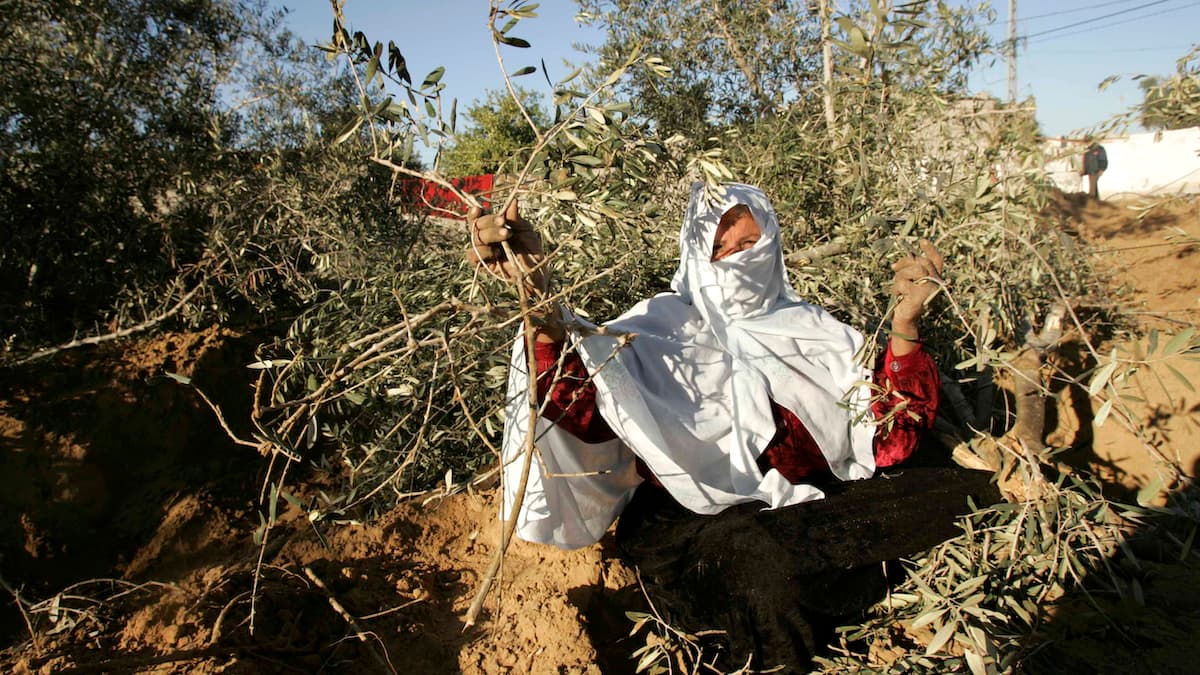
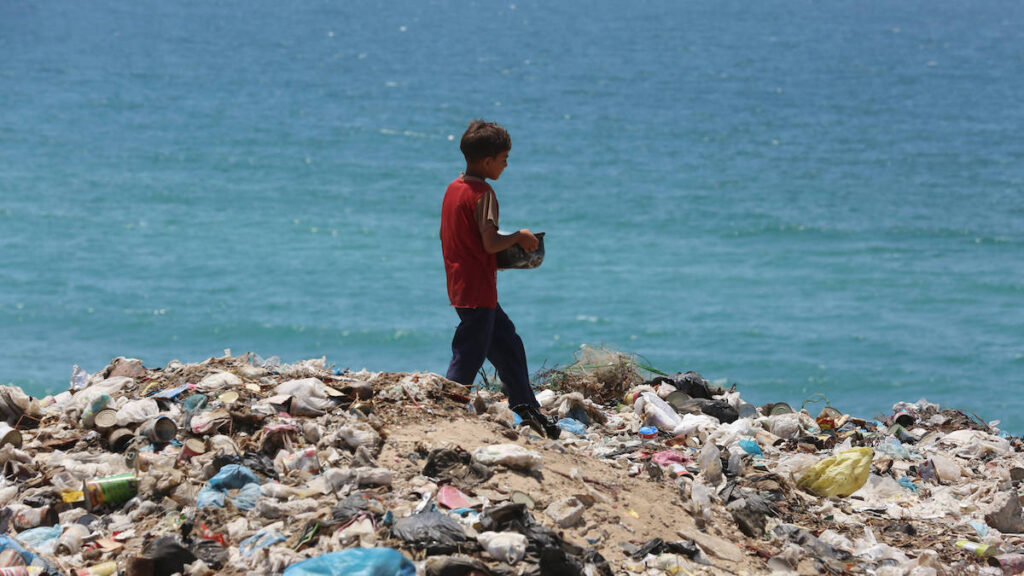
Israel’s genocide of Palestinians should be clear to the world by now. But what about Israel’s ecocide? What about Israel’s decimation of Gaza’s olive groves and farms, its contamination of Gaza’s soil and groundwater, and its pollution of Gaza’s drinking water, coast, and air? And what about Gaza’s animals, who are also being punished and starved? The environmental consequences of the war will be felt by Palestinians for generations — and the war also has health and climate consequences for the larger world. There are now calls for Israel’s ecocide to be investigated as a war crime.
The environmental consequences of the war will be felt by Palestinians for generations. And the war also has health and climate consequences for the larger world.
Even before the war, water in the region was polluted and virtually undrinkable because of Israel’s continuous siege. The situation has only worsened. In potential violation of international humanitarian law, Israeli airstrikes have destroyed water infrastructure and wells. As of last November, an estimated 95% of Gazans were without access to clean water. Agricultural areas in Gaza have mostly been abandoned due to Israel’s bombardment, though a few farmers are resisting.
In December, Israel flooded Gaza tunnels with seawater. This further endangered the region’s already scarce water supply by worsening the contamination of the aquifer that once supplied most of Gaza’s water. The salt in the water can sterilize Gaza’s soil and ruin the foundation of buildings — the few remaining that Israel hasn’t bombed.
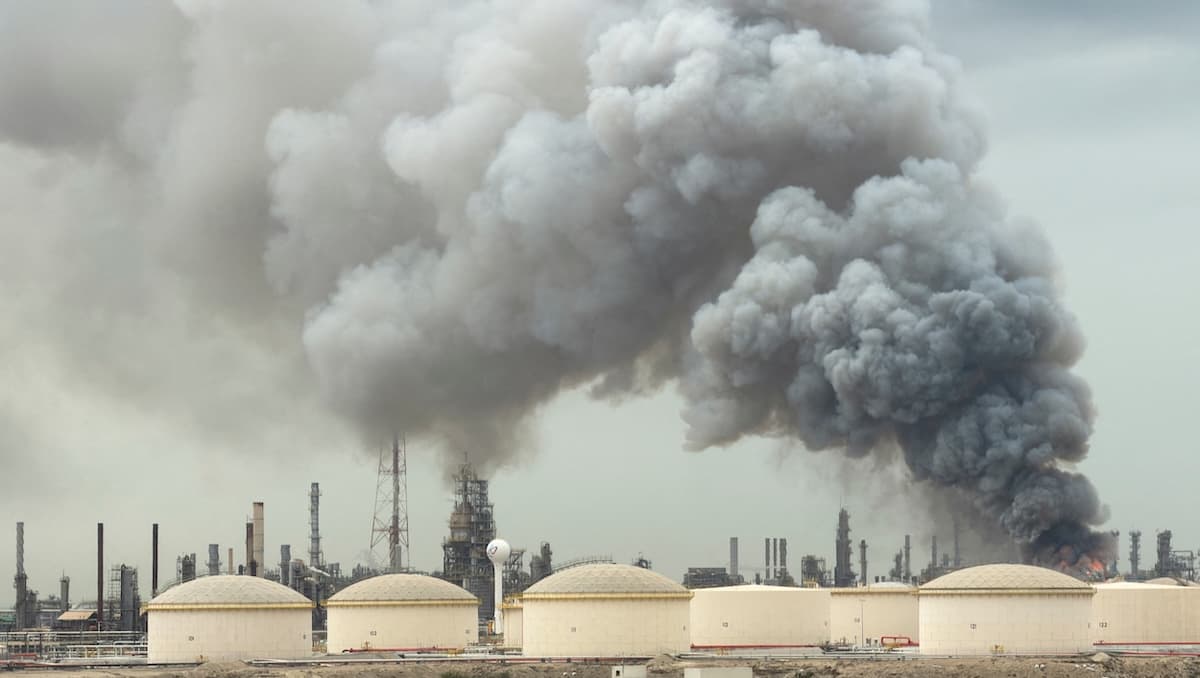
Israel’s war on Gaza also accelerates climate change. The Guardian reported that more than 99% of the 281,000 metric tons of carbon dioxide equivalent generated by Israel and Hamas in the first 60 days of the war “can be attributed to Israel’s aerial bombardment and ground invasion of Gaza.” The war industry is one of the world’s biggest industrial polluters. Military forces contribute 2,750 million tons of carbon dioxide equivalent per year, or 5.5% of all greenhouse gas emissions.
This is because war involves deploying large military forces, which consume vast amounts of fossil fuels. In Gaza, it’s not just a matter of the Israeli military’s use of fossil fuels for operations, but also the fossil fuels used by the U.S. and other allies for the production and transportation of arms and other supplies. Let’s not forget the raw materials obtained from mining, the energy needed to transform and produce weapons, and the environmental costs of factories and related industries.
For example, by last December, the U.S. had already covertly sent Israel more than 10,000 tons of military equipment in 244 cargo planes and 20 ships. These transfers also included more than 15,000 bombs and 50,000 artillery shells.
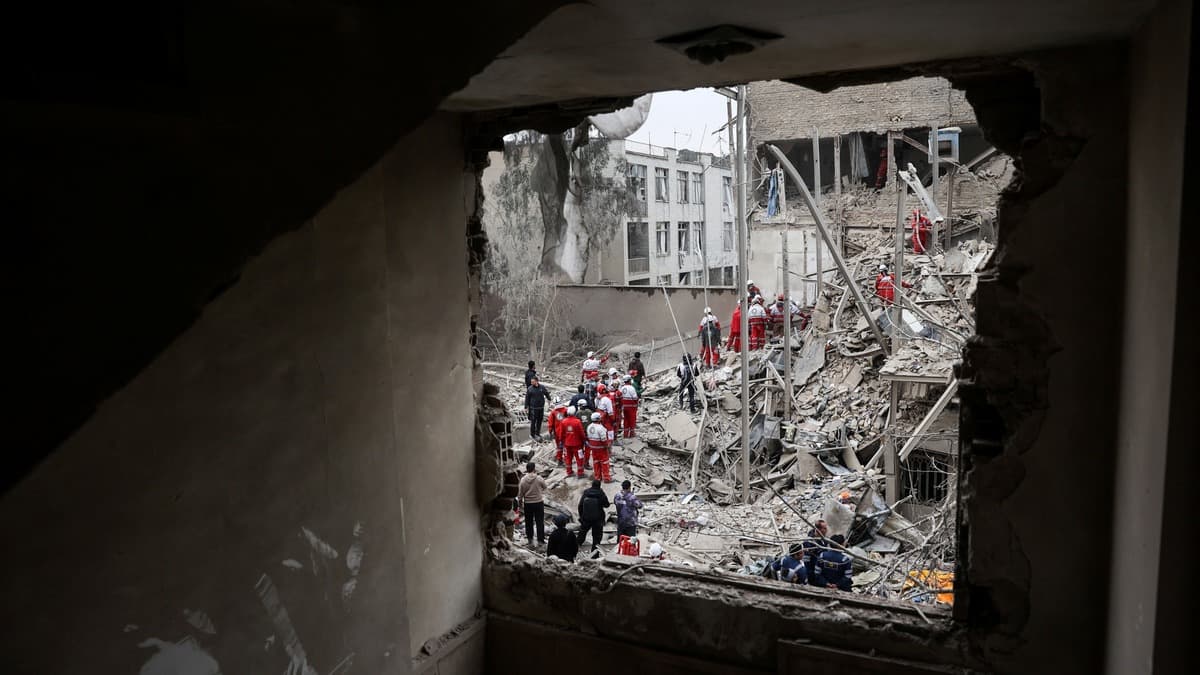
Israel has leveled Gaza, which also means infrastructure like factories, power plants, and transportation systems have been reduced to rubble. The destruction of these systems — including food operations, like Gaza’s last remaining wheat mill — not only accelerates famine, but the bombing releases stored carbon into the atmosphere that disrupts local ecosystems and contributes to environmental degradation and climate change. Hospitals have also been the prime targets of Israel’s bombing, which means biohazardous waste is also dispersed into the air and scattered across the region.
The U.S. continues to provide substantial economic and military aid to Israel, including missile defense funding and military packages, which have directly fueled Israel’s assault on Gaza. This aid has played a crucial role in sustaining Israel’s “apartheid tech,” but it also benefits the U.S. military-industrial complex that thrives on warfare and arms sales. To continue receiving billions of dollars in military funding from the U.S., Israel is required to use the funds to buy U.S.-made weapons, often from companies like Lockheed Martin, RTX, Boeing, and General Dynamics, which have seen their stock prices skyrocket since October.
The significant military aid the U.S. continues to provide Israel not only fuels the genocide, but also serves the economic interests of the U.S. defense industry, reinforcing a cycle of violence and militarization that demands negotiations, not more weapons.
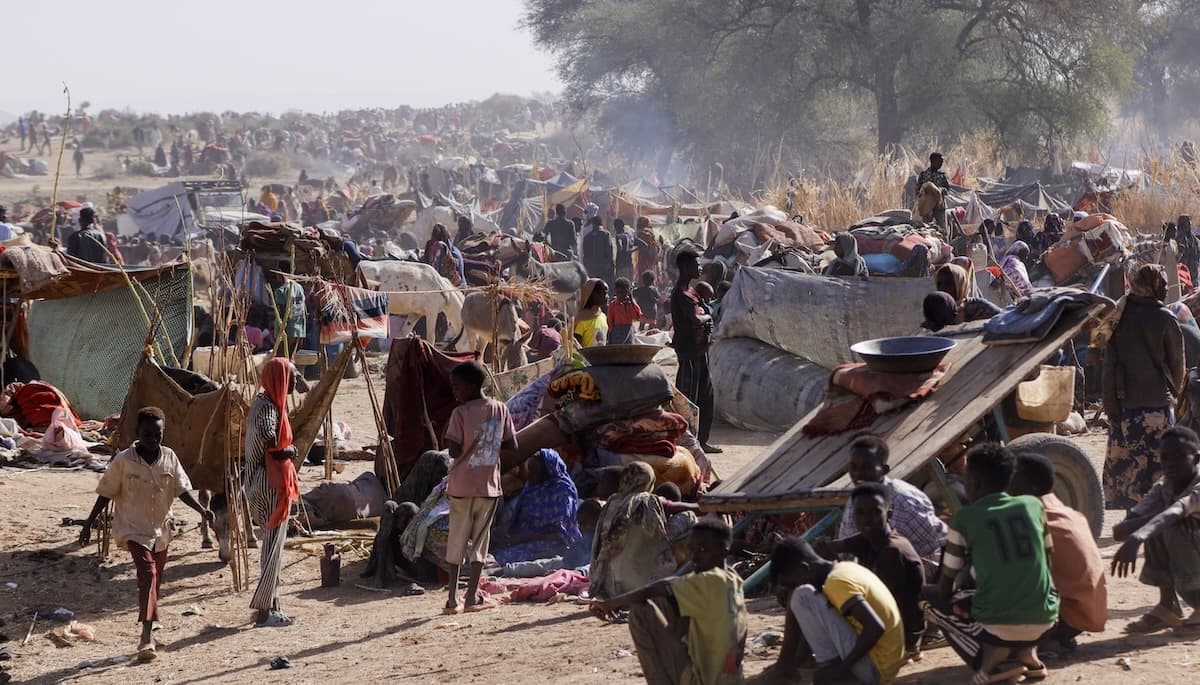
Conflict also leads to mass migration and displacement, which can increase pressure on the environment and contribute to climate change. The need for populations to migrate also increases xenophobic discourse from right-wing extremists — the same people who blame fleeing migrants for problems they did not create.
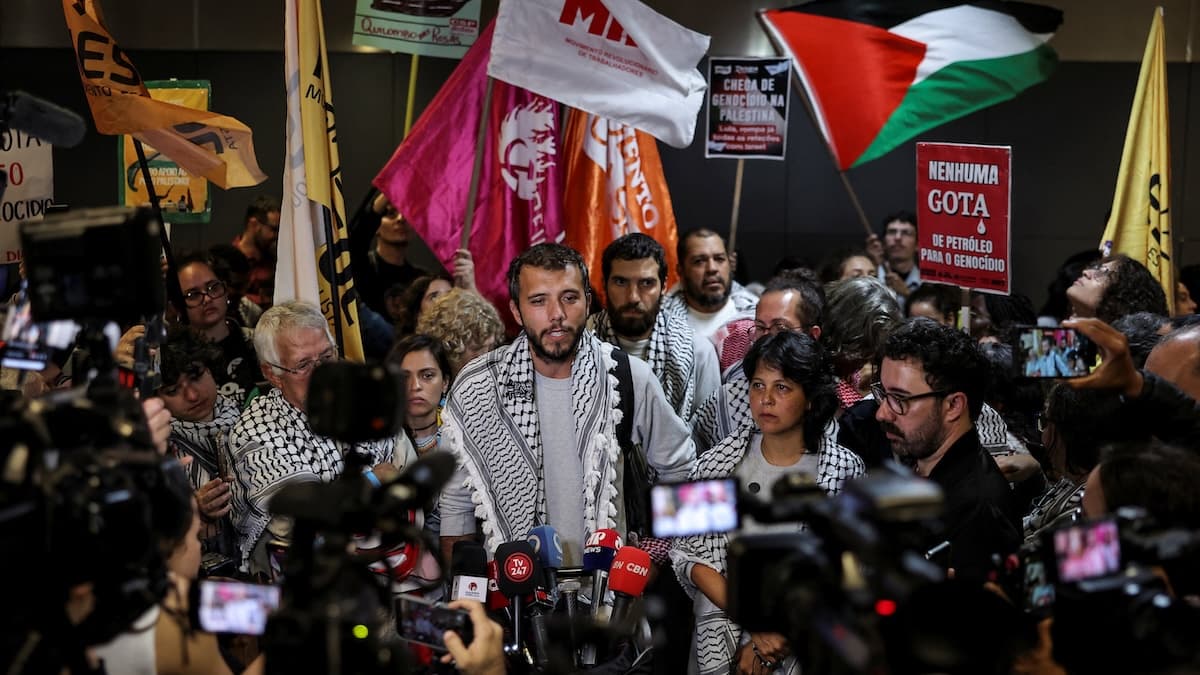
People across the U.S. have called for a ceasefire in Gaza. This is necessary to save lives, but it will do nothing to repair Gaza’s environment. Just as we cannot turn away from the human rights crisis unfolding in Gaza, we must not overlook the intrinsic connection between environmental degradation and justice.
Human rights are inseparable from the defense of the environment. Through Israel’s war on Gaza, we have seen ethnic cleansing, war crimes, and egregious attacks on human rights. The destruction of Palestinians’ land is on par with these crimes. Collective punishment and genocide are incompatible with any notion of justice — including environmental justice.