
Seven months into Israel’s devastating and relentless assault on Gaza, advocates of international law glimpsed something rare: a possible measure of accountability. In May 2024, the International Criminal Court’s chief prosecutor, Karim Khan, applied for arrest warrants against Israeli Prime Minister Benjamin Netanyahu and his former defense minister, Yoav Gallant, charging them with war crimes and crimes against humanity in Gaza. The ICC issued those historic warrants that November.
The decision came at considerable cost to Khan and the court. Twelve U.S. senators, including Marco Rubio and Mitch McConnell, sent Khan an ominous letter, warning: “Target Israel and we will target you.” Indeed, in February 2025, President Trump signed an executive order placing Khan under U.S. sanctions. The Russian Federation, which had been served with an ICC warrant for President Vladimir Putin a year earlier, convicted Khan in absentia and sentenced him to 15 years. Former British Prime Minister David Cameron also threatened to defund the court.
Khan himself has since been on voluntary leave from the court pending an inquiry into a misconduct allegation against him, which was unanimously dismissed by three independent judges earlier this year, although the court’s political body has unusually declined to formally close the matter.
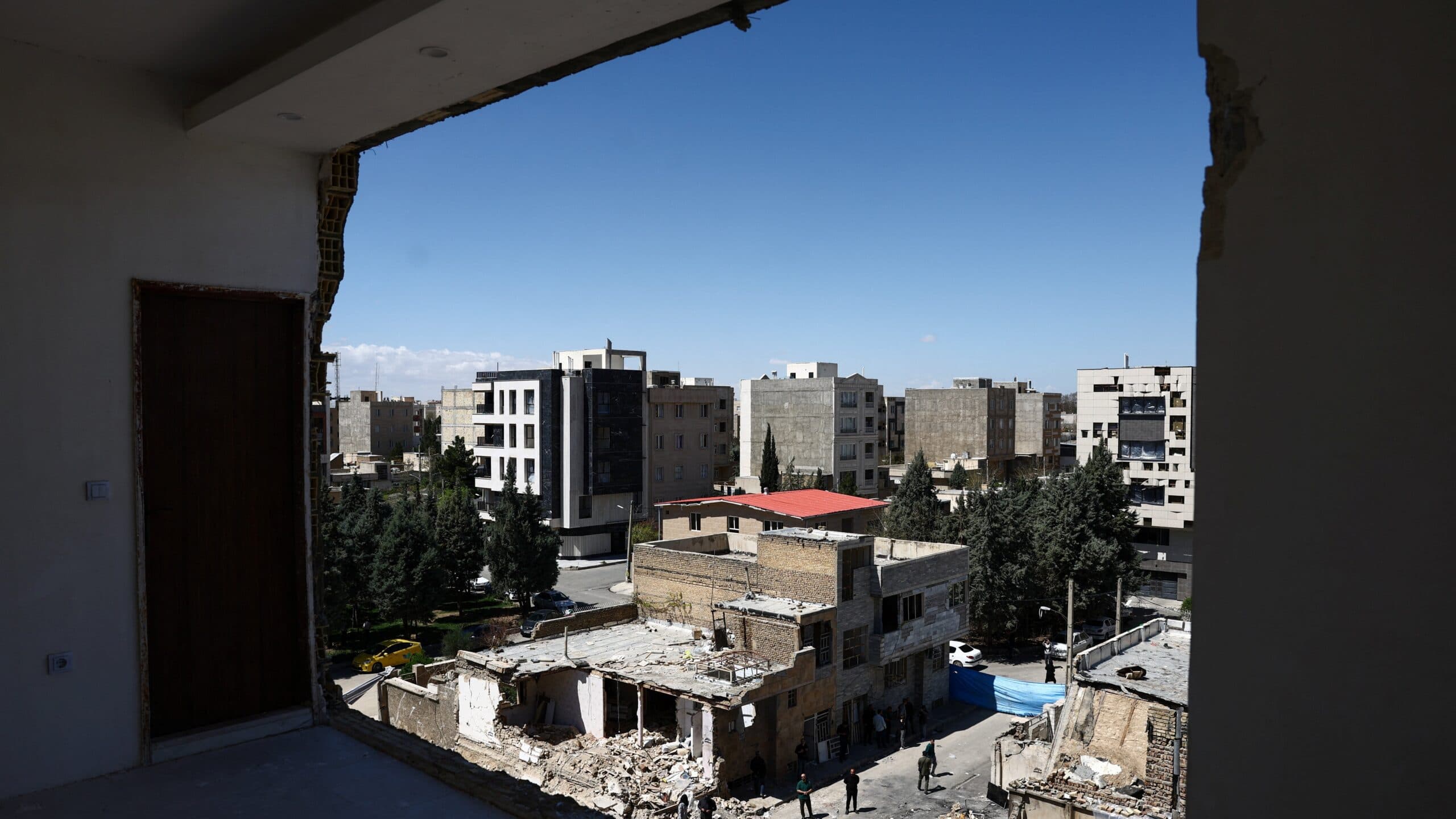
The warrants were meant to be a turning point. And yet, in the year and a half since they were issued, nearly 30,000 additional Palestinians have been killed in Gaza, where the suffering continues unabated, and the illegal West Bank settlements are expanding rapidly. States’ brazen indifference to international law seems to have only escalated: the United States and Israel launched an illegal war on Iran, the U.S. abducted Venezuela’s president, and Sudan has been ripped apart by war and famine.
It’s not unfair to ask the question: Does international law mean anything at all?
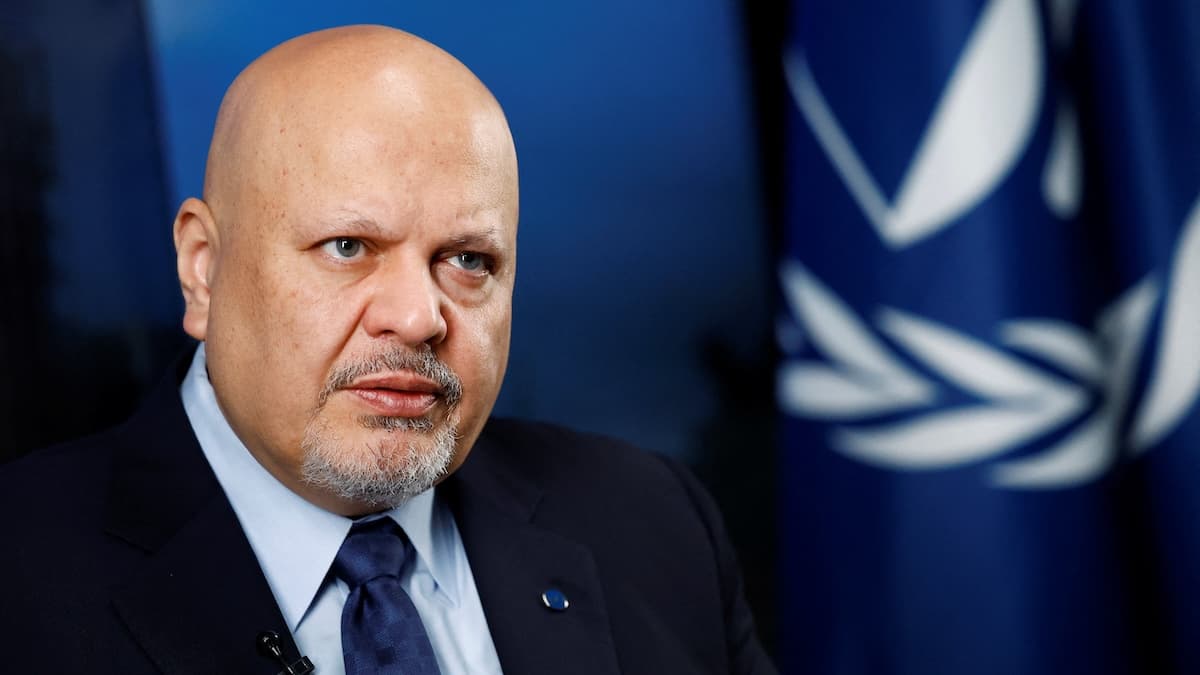
In a wide-ranging interview, Analyst News spoke with Khan recently about whether the warrants have achieved anything, the threats against him and his family, and if the ICC, and international law itself, have a future.
This interview has been edited for length and clarity. View the full conversation on YouTube.
After witnessing a two-year genocide in Gaza live-streamed on our screens, why should ordinary people still believe in international law and justice?
What we see on our TV screen is a fraction of the human agony, the groans that should keep us all awake at night. It should be an argument to redouble our efforts and not to give up to despair and despondency, but to fight for justice.
If crimes are being committed in different parts of the world, what redress do people have? There has to be an effort to hold people to account. There has to be an effort to have a basic standard, a basic benchmark below which humanity does not accept and speaks out to say this is reprehensible, and the law should represent that minimum standard.
The law is weak, but it’s not as weak as we think, and it can’t work alone. It’s about building a community of action. People should realize they’ve got a voice.
The major powers of the world — Russia, China and the United States, which supports Israel — don’t recognize the ICC’s authority. One could argue that they’re causing most of the problems today. Haven’t international law and the ICC already reached irrelevance?
Many people could say that, but look at the responses, look at the hostility. Why would President Putin put an arrest warrant against me and sentence me to 15 years if the work was of no relevance? Why would the president of the United States, in February 2025, sign an executive order naming me to be sanctioned by the United States of America if this were all a strawman of a court, and of no significance?
The imperfect application of the law doesn’t mean that the pronouncements of institutions, whether that’s the International Court of Justice or whether it’s the applications by the prosecutor, or the decision of judges of the court, are irrelevant. And if they were irrelevant, why the visceral reaction? Why the ad hominem attacks in the Security Council by the Russian Federation, or the attacks by senators, some of them who are more powerful even than heads of government of other countries? So it tends to suggest there is a concern not in the muscle of the law, but in the moral clarity that the law brings to public opinion.
Why would the president of the United States, in February 2025, sign an executive order naming me to be sanctioned by the United States of America if this were all a strawman of a court, and of no significance?
We’re in a very moment in which one is filled with dread, because the trajectory is not good. We are seeing more conflicts and more injustice, and a greater willingness by remote control, almost like Nintendo kid generation, to bomb and kill people, kill children. We say, well, that’s the price, that’s collateral damage — which is hugely worrying and heartbreaking.
But people around the world are waking up, and they’re realizing that justice is too important to leave to the lawyers, it’s too important to leave to the prosecutor of the ICC, or the judges of the ICC, or to the International Court of Justice. Every person should take justice as their birthright. When you see the types of actions we see, people should clamor and demand justice to restrain the hand of powerful tyrants.
What do you see as the biggest threat to international law today?
The complete disregard of international law by some powerful actors is a worry.
International law has never been perfect. International law is a work in progress, as humanity is a work in progress, and there have always been double standards. There was a double standard at the end of the Second World War, when five permanent members of the Security Council were given a veto that was political expediency trumping justice, because it was the way to have a United Nations.
What is different now is that in some quarters, the pretense of trying to justify action as being legal has fallen away. There’s a more candid, a more ugly, a more disconcerting willingness to say, well, actually, we don’t need this law at all. Sovereign power, the number of battleships, missiles, drones and bombs that we have allows us to do what we want, take what we want, bomb what we want. The law is not only inconvenient; that law, which is meant to be a brake on absolute power, that is meant to be a guardrail from egregious acts, is an enemy to power dynamics. I think it’s brought the conversation into the spotlight.
Look at Norway, Spain, Ireland, Latin American countries. They’re finding their voices, but more important, people around the world, in America, in Europe, in Asia, in Africa, are seeing things clearly; that law cannot be a fig leaf to hide the naked truth, that on too many occasions justice is seen as what is politically convenient, and now that should be a recruiting sergeant for action rather than recruiting sergeant or a license for despair and despondency, because if you despair and become despondent, those architects of chaos that want to keep causing division will win.
You mentioned the veto power — the U.S. has used its veto at least 50 times to block accountability for Israel and to veto numerous U.N. resolutions. Is that one of the biggest barriers to international justice today?
Absolutely. The veto power is bringing the United Nations into disrepute. It’s not me that’s saying that. This is why even the French put forward a proposal some years ago that, in terms of genocide, crimes against humanity, there should be a self-restraint by the council members not to use the veto in those circumstances.
In international law of the sovereign equality of states, all states are equal. This is the theory of classical international law. A Tuvalu in international law is as equal and meaningful as United States of America or the United Kingdom, and yet we don’t give Tuvalu a veto, and we see on so many occasions it is the veto that works against the public good, and I think this is one of the issues that causes a lot of disquiet with many states in many areas.
Meanwhile, President Trump has said that he doesn’t need international law. Earlier this year, he kidnapped Venezuela president Nicolas Maduro. He’s starving Cuba, and he’s attacked Iran at Israel’s behest.
You can’t say Trump is wrong in the short term, because what does “need” mean? He doesn’t need it because he’s managing to do what he wants in a number of different countries of the world.
But one needs to look at the question differently: Does the world need international law, and should America seek to improve its compliance with international law, not out of some philanthropic principles or charity to different parts of the world, but for their own interests?
If they comply more with the law, it is actually in their best interest economically and diplomatically. The horizon of interest [for U.S. presidents] is their term, which is four years. It’s not looking at the risk of Armageddon. We see this mushrooming of conflicts in different parts, and the arrogance of leaders throughout history is thinking that conflicts can be insulated.
[This is not leading] toward a better economy, more peace, more prosperity or better relations. It is demonstrably leading to more factionalization, division, polarization, chaos and conflict. In the end, it will affect the countries that are bombing; injustice never begets justice.
When you applied for arrest warrants for President Putin, you were applauded and supported by America and Britain, but not when you applied for arrest warrants for Israeli leaders. Why do you think the reaction was so different?
These are fickle things, applause and criticism. The reason it happens is a function of power. When a foe is targeted, they will applaud the action, and when their friend, ally or a country that they have some dependency on is subject to the law, they will stay silent or they will oppose it.
What’s important is not the principle, but the power dynamic involved in the situation. Until we get to a position where friends can disagree, the world is not going to change course.
It is in their interest and in the interest of the wider international community to try to apply the law better and more widely, so that it can steer us away from more suffering and ever-widening conflicts.
Former British Prime Minister David Cameron tried to pressure you not to apply for those arrest warrants. U.S. Senator Lindsey Graham said to you that the ICC is meant for African leaders and President Putin. Have other leaders said similar things to you?
There was a great deal of consternation, and 12 senators, including Marco Rubio and Mitch McConnell — quite powerful individuals — wrote a public letter to me, and they said, “You go against Israel, we’ll come after you and your family. You have been warned.” That’s how it ended. “You have been warned.”
The good news is there are many people out there who refuse to succumb to intimidation and threats, despite whatever I faced. The men and women of my office continued to do their job.
I’ve been convicted by the Russian Federation to a 15-year sentence for the audacity they think of applying for warrants that judges independently gave in relation to the aggression against Ukraine, and President Trump has sanctioned me and my family because of Palestine, but the judges issued the warrants. I think deputies and judges were then sanctioned some months later in August, and NGOs in September, but the work continues.
You had your email disabled, your bank accounts frozen. Is that still the case?
Yes, I don’t have any credit cards, all those types of things. [I’ve faced] travel bans, my children’s visas [have been] reversed. Even Magnitsky sanctions for human rights violations don’t apply to family, but as the senators said, they would come after me and my family. They’ve done that.
This is painful. It’s difficult. It’s meant to coerce. It’s meant to make us change course. We can’t.
That’s a testament to the men and women of the office that it’s not about us. It’s about victims and their right to justice. They’re not worthless, they’re not numbers, they’re not abstract concepts. They’re people who have lost their babies, their wives, their husbands, their grandparents, their property. They’re moving across continents and borders in Darfur with plastic bags, fleeing for their lives. Their lives mean something.
We’ve got to keep on going, because more important than us is the cause of justice and the belief that one day, justice will count more than it does at the moment. And in the interim, it does mean a lot to victims around the world that their suffering is being noted.
In April 2025, Hungary’s then-Prime Minister Viktor Orbán withdrew from the ICC so he could host Netanyahu and would have no obligation to arrest him. Now there’s a new prime minister who is thinking of rejoining it. Does this undermine the credibility of the court and international law?
States are sovereign. We’re not in a world where there’s a president of the world and there’s a universal parliament that’s enacting universal laws. We are built upon the United Nations, its member states.
If an American, Israeli, Russian or Pakistani comes to England and commits a crime, it’s no defense to say, “We’re not a state party, we’re not a national of the U.K.” By entering the territory, the law of the United Kingdom applies.
The same applies to the ICC. If the act is committed on the territory of a state party, we can investigate it, and the judges can issue warrants. Then it’s about states enforcing those warrants, or suspects saying that’s nonsense, I’m going to show this is a bunkum, let me come before the court and expose this incompetent prosecutor. When they don’t do so, it rather begs the question, What are you scared of? Are you scared of the truth?
Historically, the ICC has mostly prosecuted African leaders. And the one time the court issues arrest warrants for a Western ally, it’s the subject of severe sanctions and backlash. Does the International Criminal Court only serve Western interests?
Many politicians will seek to instrumentalize possibilities to advance their conception of political interest. So yes, some individuals with warped thinking or bigotry or prejudice may still have those conceptions that we’re living in a world of colonial domination in which the white countries dominated the non-white countries in different parts of the world.
And yes, it’s correct that before I became prosecutor, there had been no warrant issued or applied for outside the continent of Africa in relation to core crimes, genocide, war crimes, crimes against humanity, or the crime of aggression.
But that is changing. I applied for warrants in the situation in Georgia, and then Russia, then Israel, and Palestine, then Afghanistan with the Taliban, then Myanmar and Bangladesh, then the Philippines. I opened an investigation in Venezuela.
Just because somebody does an injustice to you does not give a license for you to do injustice to them.
So it’s no longer true to say that the court is focused only on Africa, but yes, some may be seeking to apply justice to countries that had previously been subject to colonialism or are economically weak or are not important strategic allies, but it’s the duty of officials, elected officials, judges, prosecutors to make sure that they don’t.
We don’t have special forces, we don’t have police forces, we don’t have an army. We don’t control who flies over what territories. This requires states or state parties. 125 states are committed to the Rome Statute. They have to not just talk the talk, but walk the walk. They must cooperate with the court to execute those warrants, and that’s very much a mixed bag, because some countries now, we see that their undertakings to the court have come into conflict with their national strategic interests, which means that they would wish certain cases just were erased.
Should the ICC have an army if there is no way of enforcing its arrest warrants?
No, of course it shouldn’t have an army, it should not have a police force. Institutions should have a greater role. If states fulfilled their international obligations, there’d be no need for an ICC because states would repress crimes, they wouldn’t allow genocide or war crimes or crimes against humanity. There’d be no role for the ICC if domestic states fulfil their own responsibilities.
Secondly, if state parties fulfil their responsibilities, there would be much more enforcement. Many have discussed whether the United Nations should have a force, so that when there were cases of aggression, the United Nations had the ability to mobilize to enforce a peace.
So that debate has more merit, but it’s been kicked into long grass. I think clearly there needs to be an ability to apply the law with greater justice. But at the moment, when we don’t have justice, then even those forces may be used to further iniquity rather than to promote justice.
If one day, Israeli leaders are brought to The Hague, they may use the defenses they are today: They say they’re fighting in self-defense, the other side is using human shields and innocents killed are collateral damage. Are these legitimate defenses?
There is also a principle in law of Tu quoque, which means “you too.” It’s not a defense to say, well, you did that, therefore I can do this. Injustice cannot be met with injustice. This was also what the head of the Ahmadiyya Muslim Community [His Holiness Hazrat Mirza Masroor Ahmad] mentioned expressly [at its recent international Peace Symposium]. He said that just because somebody does an injustice to you does not give a license for you to do injustice to them. That’s not a statement only of moral clarity of religious principle. It’s a matter of public international law. The fact that individuals, Hamas, committed crimes, is not a license to tear up the law and lay waste to whole city blocks, and to a people, or to use starvation as a method of war.
You’re on voluntary leave pending an investigation into misconduct, which you’ve been cleared of by three independent judges. When will you be back at the ICC?
Well, I thought it was all over. I don’t know the answer to that. I cooperated with this ad hoc process. Judges unanimously found no misconduct or breach of authority, no reprisals as alleged, no misconduct as alleged. But unfortunately, the political bureau of the Assembly of State Parties did not immediately close the matter. It’s a concern that they seem to be devising a new process. We’ll wait and see what happens next, but as soon as it’s over, inshallah I will go back and resume my responsibilities, but we have to wait and see.