
On Jan. 27, the Bulletin of the Atomic Scientists’ infamous Doomsday Clock struck 85 seconds to midnight, its closest setting to catastrophe ever, as wars raged on nearly every continent.
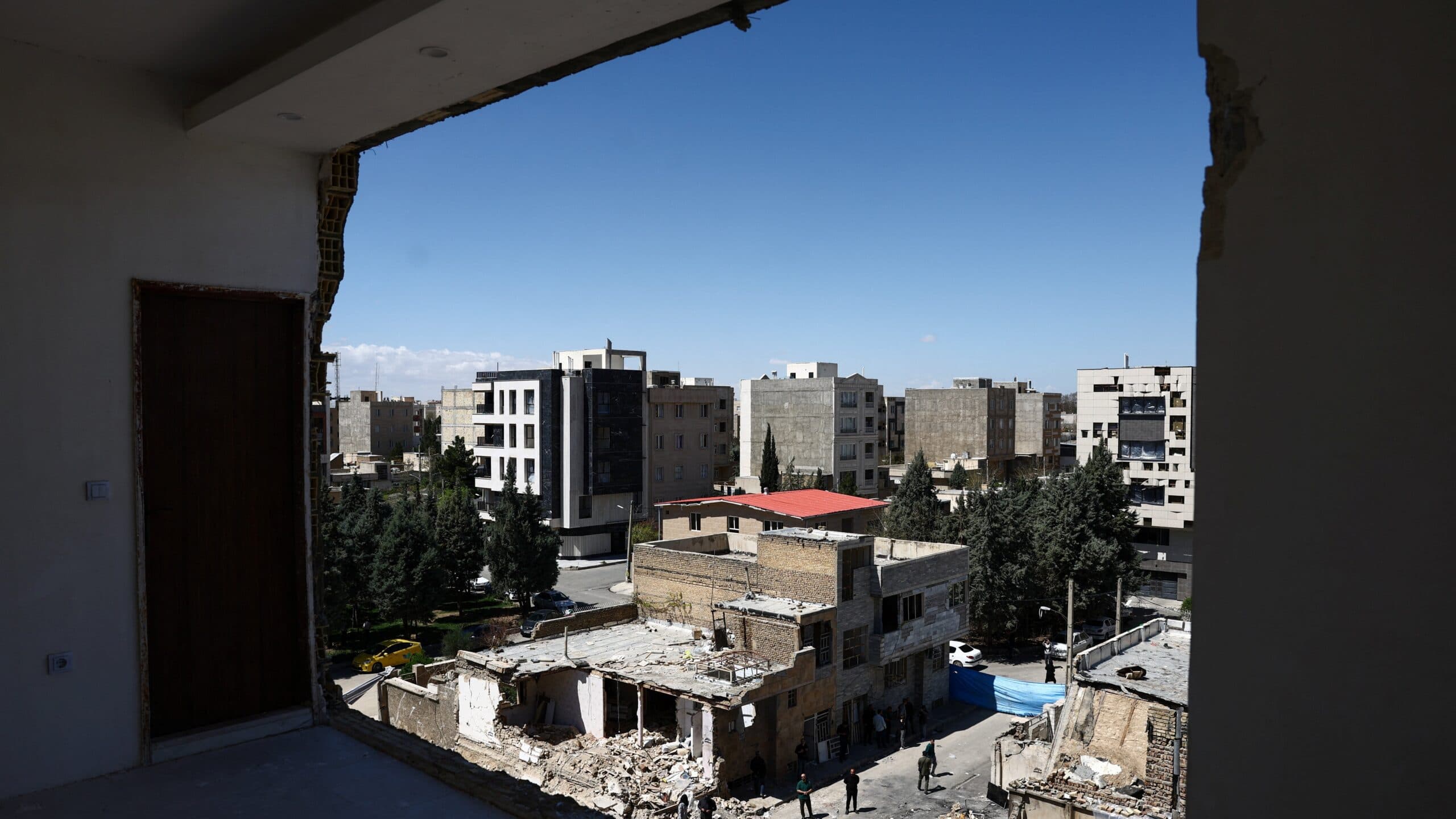
Governments show little sign of stepping back. In the time since, an aggressive U.S.-Israeli campaign against Iran has begun and spread into Lebanon. Nine countries currently hold the world’s roughly 250 nuclear warheads (Iran is not among them), but the rising instability has only pushed nations from France to Japan to rethink commitments against nuclear weapons or expand their existing nuclear arsenals.
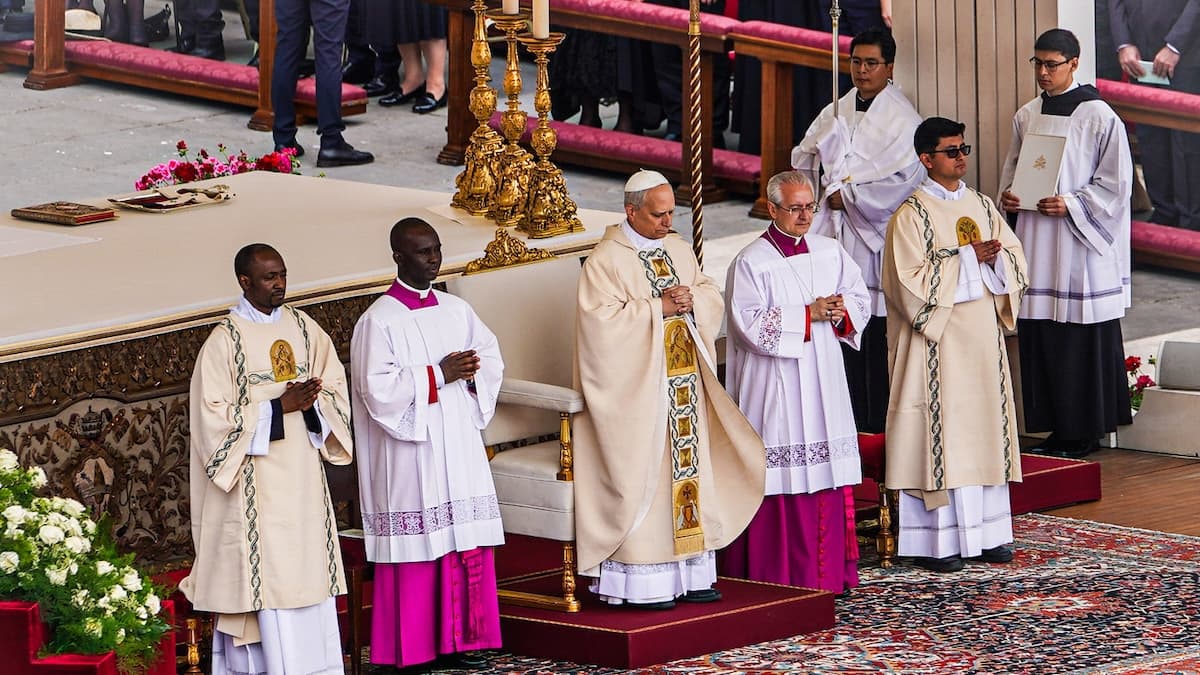
But across faith traditions, religious leaders have long been warning that the drift toward war and nuclear armament demands a reckoning. Just this week, as the U.S. launched new attacks on Iran and called for $70 billion to expand its war further, Pope Leo XIV has released a new book calling for nuclear disarmament.
“Weapons boom and kill in Ukraine, in the Middle East, in Sudan, in Myanmar, in Yemen, in Congo and in many other situations,” Leo writes in Unarmed and Disarming: Peace Is a Gift, a collection of his speeches and texts published by the Vatican this week. “[It] is not atomic weapons that generate peace, but disarmament.”
But the clear postwar consensus against nuclear escalation has been “obscured by a race to armament that today frightens and terrifies,” he writes, capping months of public tension with President Trump over the Iran war. Leo has said he has no fear of the administration and that the Church has opposed nuclear weapons for years.
This is not a new warning from Leo, the first American pontiff. In January, in a major address to diplomats from 184 countries, Pope Leo decried governments’ eagerness to court further violence and military action. “War is back in vogue and a zeal for war is spreading,” he said then, observing that diplomacy based on dialogue and consensus is being replaced by one based on force.
Other religious leaders have also been sounding the alarm bell for years.
In May, standing before a room of more than 600 diplomats, parliamentarians and faith leaders in the U.K., the worldwide head and caliph of the Ahmadiyya Muslim Community told listeners that another world war was already underway.
Reflecting on warnings he has issued for over a decade, Hazrat Mirza Masroor Ahmad said at the Ahmadiyya Muslim Community’s National Peace Symposium: “The Pope and others are now acknowledging what I have long warned about — that a world war has already begun and that piece by piece, the world is sleepwalking ever deeper into its grip.”
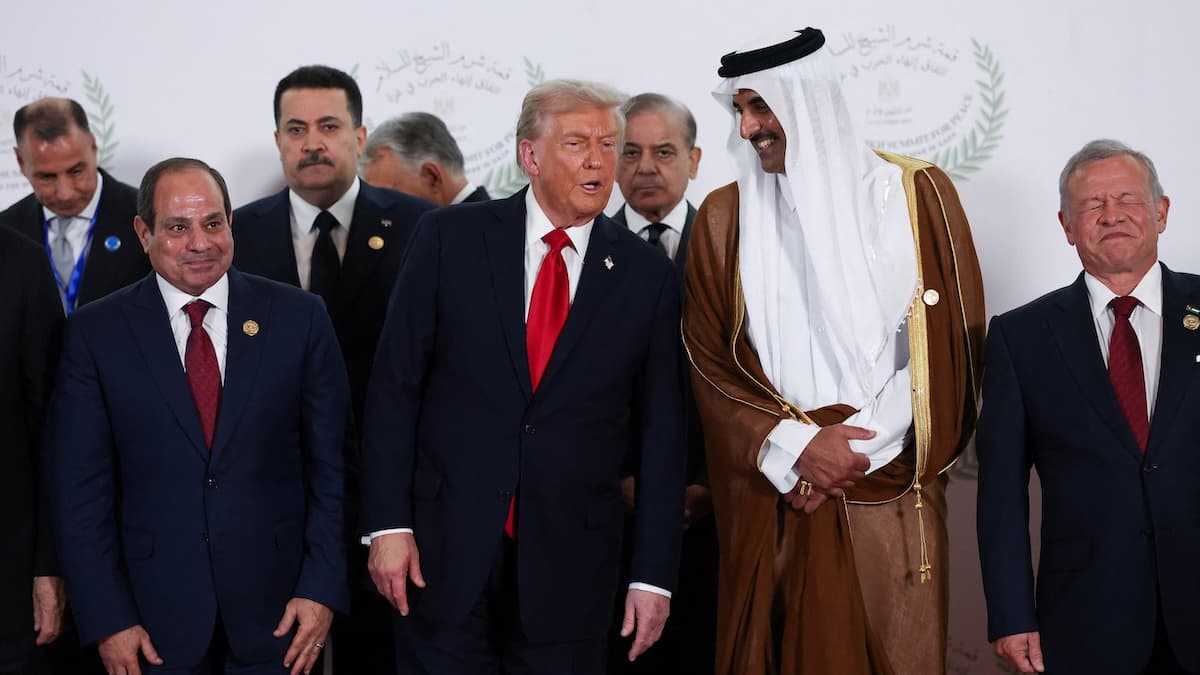
In his speech, the caliph argued that today’s conflicts stem not from religion but from major powers acting with impunity and pursuing narrow self-interest, while smaller nations bear the cost. He noted that far more countries now hold nuclear weapons than in 1945, warning that even a single detonation today would cause devastation beyond comprehension.
“Today, certain major powers are acting with impunity, brazenly disregarding international norms and pursuing narrow self-interests above all else,” the caliph said. “Yet they ought to remember that unjust or illegal actions are never conducted in a vacuum … they too will suffer if the world descends into chaos and the foundations of peace are shattered.”
He has delivered versions of this warning for years. “The dark shadow of war is being cast over a very large part of the globe,” he said in a statement delivered at a Beverly Hills reception in May 2013, invoking memories of the two World Wars to warn that the next global war would be far more devastating than any conflict humanity had previously seen.
The 14th Dalai Lama, Tenzin Gyatso, has blamed the spectacle of war for the world’s fascination with it. “Most of us have been conditioned to see war as exciting and glamorous. But war is neither glamorous nor attractive. It is monstrous. Its very nature is tragedy and suffering,” he has said.
The Dalai Lama has urged peace to be brought to the negotiating table amid the raging conflict in the Middle East, starting, he says, with the countries that possess nuclear arsenals. “History shows us time and again that violence only begets more violence and is never a lasting foundation for peace,” he said in a message endorsing Pope Leo’s call to lay down arms. “Whether we look to Christianity, Buddhism, Islam, Hinduism, Judaism or any of the world’s great spiritual traditions, the message is fundamentally the same: love, compassion, tolerance, and self-discipline.”
Indeed, interfaith coalitions have also been at the forefront of calls for disarmament.
Ahead of this year’s Nuclear Non-Proliferation Treaty Review Conference, held at U.N. headquarters in New York this past spring, more than 100 religious organizations — including Quakers in Britain, the World Council of Churches and Soka Gakkai International — signed a joint statement warning that the world has avoided nuclear catastrophe not through good management, but through luck, noting that every nuclear-armed state is currently upgrading its arsenal.
“The priceless value of every human being has been forgotten by many world leaders who are in thrall to militarism,” said Quaker activist Hannah Brock Womack, the peace lead for Quakers in Britain, then. “A world free of nuclear weapons is the only safe path.”
In a message issued in May for Vesak, the Buddhist holiday marking the Buddha’s birth, the Vatican urged Buddhist and Christian communities to act as peacemakers amid rising ethno-religious nationalism, warning that believers risk becoming “complicit through silence or fear.” It called for what it termed an “unarmed and disarming” peace, built on truth and trust rather than force.
In 2019, amid a standoff following the U.S. withdrawal from the Iran nuclear deal, more than 200 faith leaders issued a joint statement calling a war with Iran unjustifiable on moral and religious grounds.
“A war with Iran would cost the world enormously in human lives, money, stability,” Sojourners founder Rev. Jim Wallis argued at that time. “A war with Iran would be disastrous and indefensible.”
Seven years on, with U.S. forces brazenly bombing Iranian territory for days on end, his warning and those of other faith leaders read less like caution than prophecy.
Disclosure: Analyst News is affiliated with the Ahmadiyya Muslim Community, though our journalists are editorially independent and our content does not represent the official views of the community. Read more.