
As an Iranian American, the past several weeks have filled me with deep anxiety. Being part of the diaspora always comes with its own tensions, but right now I feel pulled in every direction. I don’t know what the future holds for Iran, but I am fearful.
There are too many cooks in the kitchen, too many competing interests, and far too much fragmentation, hypocrisy and toxicity within the diaspora. Too often, Iran is treated like a geopolitical chessboard rather than a country of over 90 million people with diverse ethnicities, religions and levels of religiosity.
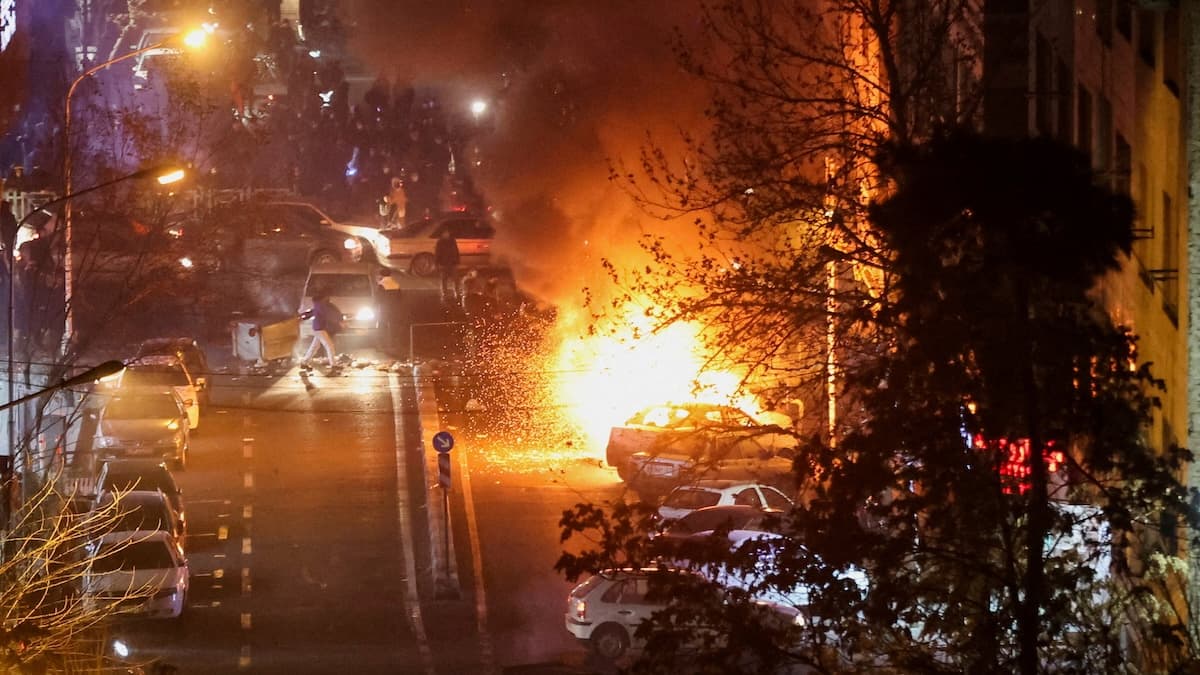
That chessboard collapses under the weight of lived reality. Across Iran, people have been protesting a dire economic situation significantly exacerbated by sanctions, alongside rampant corruption, violent repression and the mismanagement of resources. Iranians have a long history of protesting the government, but this movement is widely described by observers and human rights groups as the largest and most unprecedented since 1979. What is just as unprecedented is the amount of state violence as a response to the movement. The Iranian government is at war with its people.
For the past week, Iranians have been victims of a nationwide internet blackout, the state’s familiar modus operandi. This, compounded by widespread misinformation, makes it nearly impossible to grasp the full scope of what is happening on the ground.
What we do know is Iranians are being injured and killed in the streets, with images of blood-stained streets and row after row of body bags emerging from Iran. According to preliminary reports from activists and human rights organizations, the death toll stands at 2,400, though it is likely significantly higher: Some reports have published tolls between 12,000 and 20,000. There are also credible reports warning of imminent executions in the coming days of anti-government protesters including 26-year-old Erfan Soltani.
As with many authoritarian regimes, when the state feels threatened, it will do anything to “neutralize” that threat, even if it means shamelessly massacring its own. These will go down as some of the darkest days in Iran’s history.
When the state feels threatened, it will do anything to “neutralize” that threat, even if it means shamelessly massacring its own. These will go down as some of the darkest days in Iran’s history.
Against this backdrop of suffering and uncertainty, what is also terrifying is how eagerly the United States and Israel claim they want to help free Iranians — and how many in the diaspora and beyond continue to believe them.
Did we already forget about the last time they tried to do this? More than 1,000 people were killed during the 12-day Israel-Iran war in June 2025.
Why should Iranians trust these governments at all when they are currently funding and committing the ongoing genocide in Gaza? These are governments with no real track record of prioritizing human rights or civilian life. This may be obvious to the average observer, but when external actors with a long-standing interest in Iran capitalize on the deep-rooted trauma of many in the Iranian diaspora, reality becomes blurred. Any perceived opportunity to end this 47-year reality becomes the priority, no matter the cost.
The reality is this. The United States and Israel are not interested in freedom, but in its co-optation. They are interested in destabilization, exploitation and domination in the hope of consolidating power and exercising greater control. History has shown this time and again, and there is no reason to believe Iran would be the exception.
If this concern for Iranians were genuine and extended beyond rhetoric, it would begin with policies that do not actively deepen people’s suffering. Instead, decades of sanctions have devastated ordinary Iranians while leaving the political elite largely intact. The economic conditions that led Tehran Bazaar merchants to protest did not arise in isolation; they were largely shaped by a sanctions regime designed to exert pressure through civilian hardship, compounded by widespread government corruption.
As then-U.S. Secretary of State Mike Pompeo stated in 2019, after instituting its maximum pressure campaign, “things are much worse for the Iranian people and we are convinced it will lead the Iranian people to rise up and change the behavior of the regime.”
This does not mean the economic crisis is the only reason Iranians are protesting. It is not. Their discontent extends far beyond material deprivation to include decades of repression, state violence and widespread human rights abuses that warrant unequivocal condemnation. But acknowledging this full reality matters, because reducing the movement to a single cause, or weaponizing it for geopolitical ends, distorts the broader picture and hinders our ability to see a path forward.
For those of us in the diaspora, this blanket approach to sanctions has also hollowed out the very idea of solidarity. It makes it nearly impossible to truly support people inside Iran, reducing our support to online posts and symbolic gestures that offer little protection or relief to those facing atrocities on the ground.
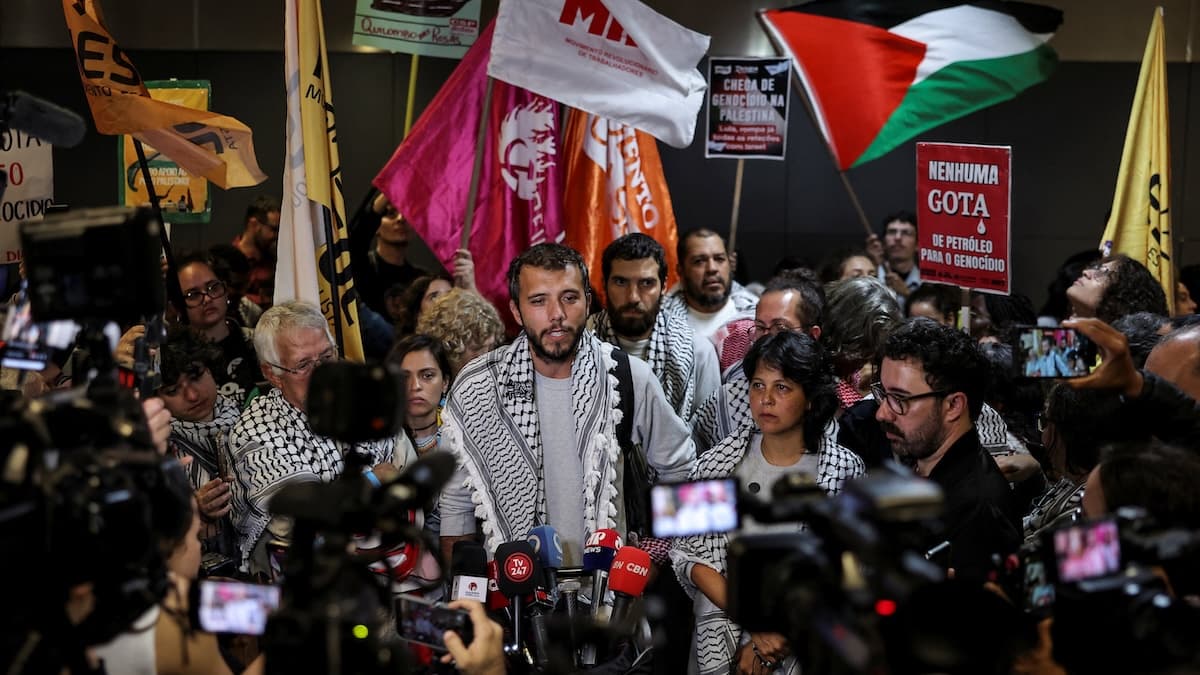
Worse still, Western involvement over the past several weeks has actively delegitimized this protest movement rooted in genuine grievances. By Pompeo tweeting ”Happy New Year to every Iranian in the streets. Also to every Mossad agent walking beside them,” and Israeli Heritage Minister Amichai Eliyahu publicly sharing that Israeli agents are currently active in Iran, Western actors reinforce a narrative the Iranian government has long relied on: that anti-government protesters are Western-backed agents. Images of marches in the West, where demonstrators hold pre-1979 and Israeli flags in solidarity, only amplify this distortion. This flattening of the movement has made people inside Iran more vulnerable and has no doubt resulted in more killings of civilians.
We must resist becoming conduits for state propaganda, whether Iranian or Western. We must imagine a future for Iran rooted in genuine liberation, not exploitation disguised as freedom.
Iran’s protest movements are not monolithic. They encompass multiple political visions, grievances and lived realities, many of which are fundamentally opposed to foreign intervention precisely because it strips agency from ordinary Iranians.
Yet instead of listening to those realities, outside actors continue to impose a future on Iran from afar by promoting figures like Israel-backed Reza Pahlavi as potential leaders of a “free Iran.” Pahlavi and many of his supporters publicly welcomed and justified the bombing of Iran in June, advancing the claim that liberation was imminent while civilians paid the price. The Iranian people deserve more than a would-be leader who believes his path to power is justified by the killing of his own people.
For those of us in the diaspora, this moment demands restraint and responsibility. We must resist becoming conduits for state propaganda, whether Iranian or Western. We must imagine a future for Iran rooted in genuine liberation, not exploitation disguised as freedom.
We must honor that Iranians have agency. They carry the weight of everyday life, resistance and survival, caught between significant domestic state violence and Western governments that treat them as pawns.
While many in the West, both within the diaspora and beyond, call for direct or indirect intervention, voices inside Iran over the last six months tell a different story. These include well-known figures like Iranian filmmaker Jafar Panahi to labor unions to the countless individuals imprisoned in the notorious Evin Prison for refusing silence.
They have been clear. The struggle against clerical fascism is not an invitation for Western intervention or monarchical restorationism. It is a demand for dignity, self-determination and accountability.
The future of Iran lives in the over 90 million people who remain there.
It lives in streets and homes, in whispered conversations and acts of public defiance.
It lives in the imprisoned dissidents behind the walls of Evin.
We must reject attempts to dictate Iran’s future from afar and instead center the voices shaped by Iran’s lived reality. I am uncertain about Iran’s future, but I know the following:
No to U.S. intervention. No to Israeli bombs. No to Western meddling.
Yes to a future Iran that is truly for the people, by the people.