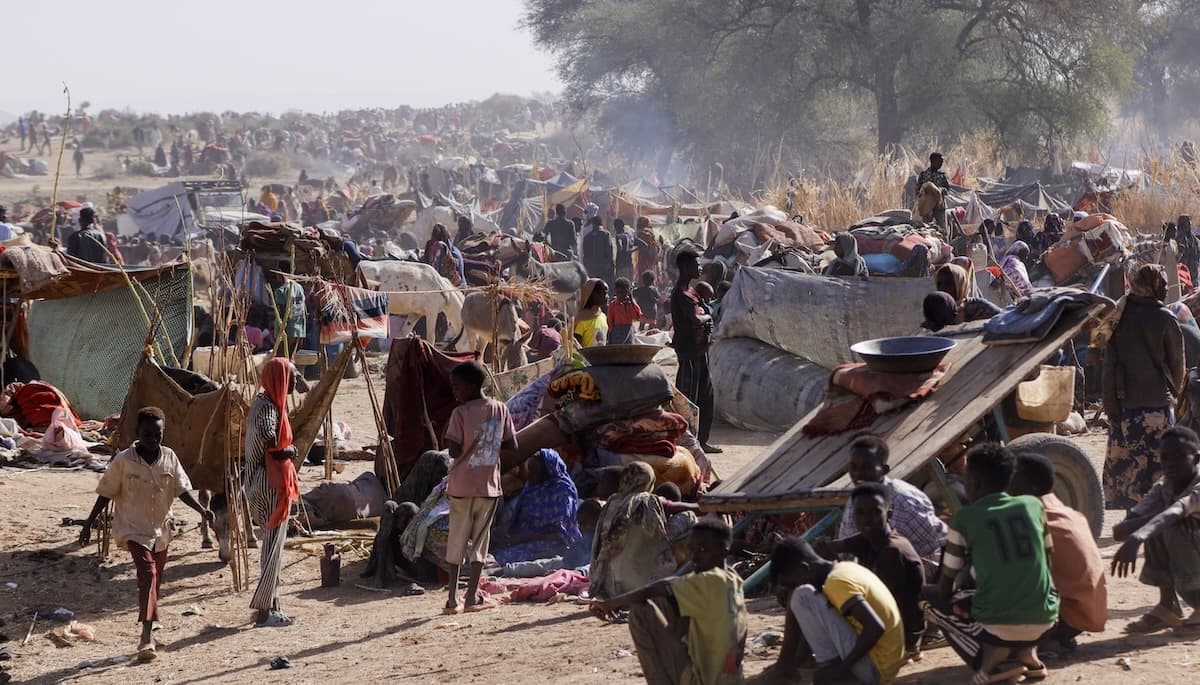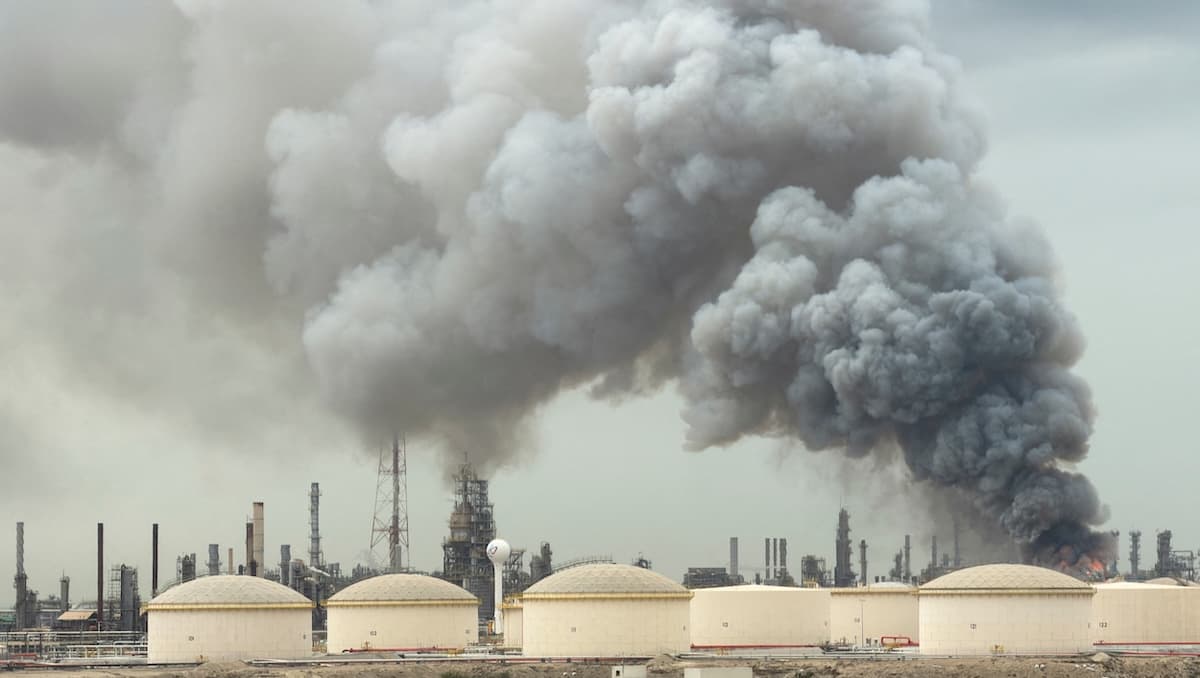


Since 2023, a civil war has been raging in Sudan between the national army (SAF) and the rebel Rapid Support Forces (RSF) paramilitary, killing hundreds of thousands of civilians and displacing millions.
The violence is not inevitable. Powerful external forces have been strategically prolonging the bloody war to promote their own geopolitical interests, enabling what’s been widely recognized as the world’s worst displacement and hunger crisis.
The United Arab Emirates has faced increasing international scrutiny for its role in financing and arming the Rapid Support Forces, including a U.N. fact-finding mission’s new investigative report. But the UAE has a partner in its plans to bring about a new geopolitical vision for the Middle East, one whose name is missing from that U.N. report: Israel.
With abundant mineral resources and 700 kilometers of maritime borders providing strategic access to the Red Sea, Sudan has become a battleground for Israel, Iran, Russia, the UAE, and other international players seeking a foothold in the region. Tel Aviv has found in Sudan’s internal power struggle another opportunity to expand its regional influence and contain Iran, in part by providing support to a militia that Washington says has committed genocide.
Clandestine support for the RSF
Well before the civil war erupted in 2023, Israeli covert intelligence had been cultivating an informal, clandestine relationship with the RSF paramilitary. Reports indicate “an undeclared race between the army and the RSF to win Israel’s favor, with Tel Aviv maintaining channels with both parties [to] influence regardless of who wins the war,” an analyst at Progress Center for Policies describes.
In August 2020, the UAE coordinated a secret meeting between heads of the RSF and the Mossad, according to reporting by The New Arab. A source told the publication that the meeting between Mossad chief Yossi Cohen and RSF commander Mohammed Dagalo — popularly known as Hemdti — included discussions of economic cooperation and full normalization of relations with Israel and was attended by top Emirati officials. Sudan’s sovereignty council has denied the meeting took place.
In 2022, a months-long, award-winning international reporting collaborative that included Israel’s Haaretz found that a mercenary spyware company called Intellexa – run by Israeli millionaire Tal Dilian, who previously commanded an elite Israeli intelligence division — had delivered advanced surveillance technologies to the RSF militia. Among the tools was Predator, a malicious, highly invasive spyware that’s infected the phones of activists, journalists and politicians worldwide.
“Equipping the RSF with sophisticated surveillance technology … will tilt the balance of power in favour of a ruthless former militia and Russia ally, bringing Sudan one step closer to an open confrontation with the country’s armed forces and increasing the risk of civil war,” Clingendael Institute senior research fellow Anette Hoffmann told reporters then. That was just a year before the war broke out.
Their investigation also found that Hemedti, the RSF’s commander, had met with Israeli intelligence at least twice since June 2021. An investigation published last month by French investigative outlet Africa Intelligence exposed that at least two RSF delegations — including Hemedti’s brothers and an RSF legal adviser — secretly visited Israel and met with officials from the African Department of Israeli Foreign Ministry and intelligence officers.
Africa Intelligence also cited American sources who alleged that Israel had planned to place intelligence officers inside Sudan, who were expected to work closely with the RSF before the war began. The United States, which has sanctioned RSF leaders and accused the paramilitary of genocide, reportedly “strongly pushed back” against Israel’s plans.
The investigative outlet has highlighted the role of Israeli-linked aviation networks in the RSF’s weapons logistics, too, noting that Israeli businessman Barak Orland’s company BAR Aviation “regularly facilitates cargo movements, allegedly involving weapons supplies [and] have been used to transport weapons to neighbouring countries.”
The scope of Israeli intelligence-gathering in Sudan and support for the RSF may run deeper than any of this suggests. Just this month, The Washington Post and The New York Times reported on a dossier — roughly 150 documents, blueprints, images, and intercepted text messages — alleging that Sudan’s army secretly developed and tested chlorine-based chemical weapons in 2024. Human rights monitors had flagged similar concerns over the SAF’s tactics independently before this dossier, both outlets attributed the new material to an unnamed “Middle Eastern intelligence agency.”
“I knew Mossad had interests in Sudan… but the level and depth and length of surveillance suggests that Israel is more involved in Sudan than we think.”
Could it be the UAE or another nation? Perhaps. But multiple Sudanese and U.S. sources subsequently told Middle East Eye that the agency behind the dossier was Israel, citing a resemblance to the dossier Israel had allegedly funneled to Washington before the U.S. sanctioned the SAF’s army chief last year. Former U.S. officials reportedly called the dossier “an advertisement” for Israeli spyware Pegasus and a sign of Israel “picking sides.” One Sudanese analyst told the Middle East Eye: “The thing that is shocking is how much Mossad has been tracking this. I knew Mossad had interests in Sudan… but the level and depth and length of surveillance suggests that Israel is more involved in Sudan than we think.”
If the intelligence source was indeed Israel, many as analysts suspect, that means Israeli intelligence was surveilling the Sudanese army closely enough to intercept a classified weapons program from senior officers’ own phones, then strategically leaked the data to covertly support the RSF.

Playing all sides
Unlike the UAE, Israel hasn’t simply been covertly supporting the RSF. It’s worked hard to formally establish diplomatic ties with Sudan’s government and national army. Analysts suggest this is part of a strategy to hedge their bets, ensuring Israel retains regional influence regardless of the Sudan war outcome, but also to potentially present itself as a peace mediator in the future.
After a military coup ended Omar al-Bashir’s 30-year rule over Sudan in 2019, Israel leveraged its strong relations with the United States and pushed Sudan to repeal its 1958 boycott law, which banned establishment of diplomatic relations with Israel and economic ties with the country. Israel had long sought to promote and expand normalization with Sudan.
In 2020, the UAE brokered a meeting between Israeli Prime Minister Benjamin Netanyahu and Sudan’s al-Burhan, who greenlit Israeli flights through Sudanese airspace. That same year, a Sudanese Foreign Ministry spokesman was fired for confirming growing rumors that normalization talks were in the works.
In early 2021, Sudan followed the UAE, Bahrain and Morocco and signed onto the Accords, though it was the only signatory to sign just the declaration rather than a full treaty. U.S. officials linked Sudan’s removal from its list of countries promoting terrorism to establishment of diplomatic ties with Israel. Removal from the list came with a bridge loan to clear Sudan’s World Bank arrears and unlock significant World Bank financing.
As the Sudanese Armed Forces sought more military assistance for its battle against the RSF, however, Sudan’s military head of state General Abdel Fattah al-Burhan increasingly tilted toward Iran, unsettling Israel. Sudan resumed diplomatic ties with Iran in 2023 and, though Sudan has denied acquiring weapons from Iran, Bloomberg reports that its military built a new hangar to house an influx of Iranian arms that same year.
Last year, per Sudanese news outlet Al-Rakoba, al-Burhan’s presidential envoy secretly visited Netanyahu in Israel. He requested that Israel support Sudan in return for finalizing the normalization process and Sudan’s full accession to the Abraham Accords, telling Netanyahu that the Sudanese government’s increased cooperation with Iran was the result of Israel’s lack of support in its fight against the RSF. “Through his envoy, al-Burhan promised to meet any conditions Israel set in order to complete the agreement quickly,” The Jerusalem Post reported.
In addition to maintaining official relations with the civilian government and supporting the RSF from the shadows, Israel has been cultivating relations with other stakeholders.
Africa Intelligence reports that several high-ranking figures in the anti-war Somoud coalition also visited Tel Aviv this year. The coalition’s leader, Abdalla Hamdok (who served as Sudan’s prime minister when Sudan agreed to normalization with Israel), was reportedly invited to a meeting by Israel’s Africa department but declined. “Somoud officials … have discussed in informal conversations the strategic value that tacit support from Tel Aviv could offer against the Islamists,” Africa Intelligence adds.
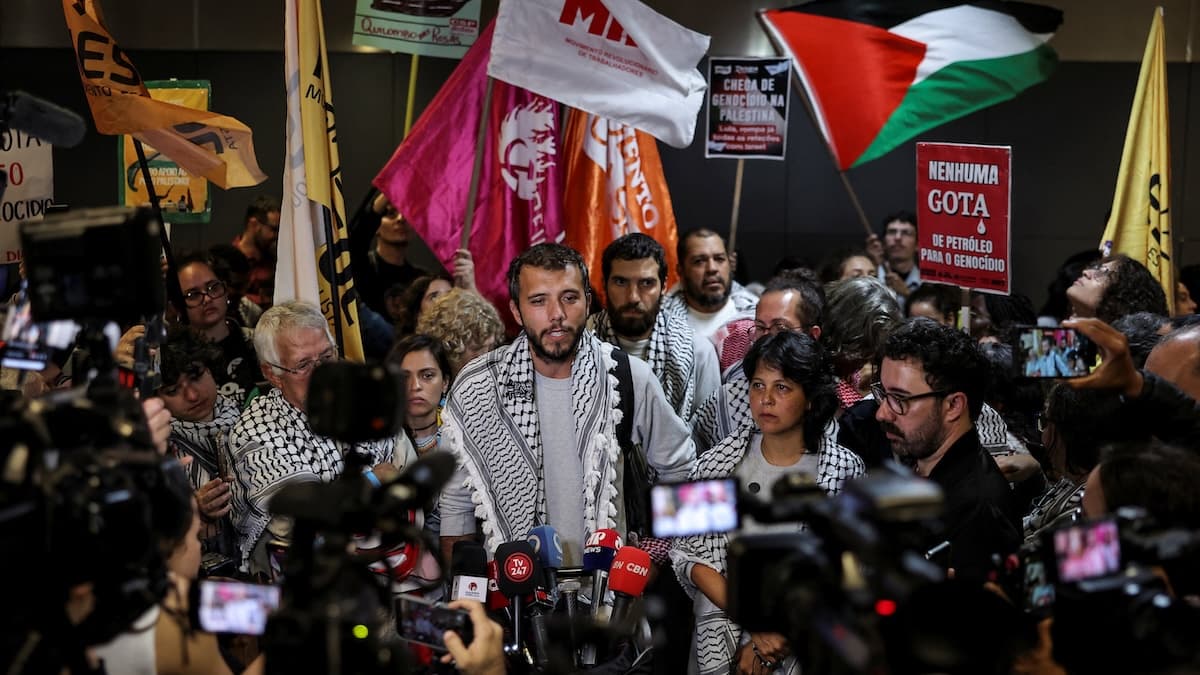
Meanwhile, within Israel, government officials have also banned the local Sudanese diaspora from protesting in front of the UAE embassy and reportedly said they will not grant permits for any protests about the genocide anywhere in Israel. “This is a very, very grave step that lessens freedom of protest and freedom of speech,” a representative of the Association for Civil Rights told the Index on Censorship. During a court hearing on the matter, they said, “it was stressed that there is a danger of harm to state security and harm to foreign relations.”
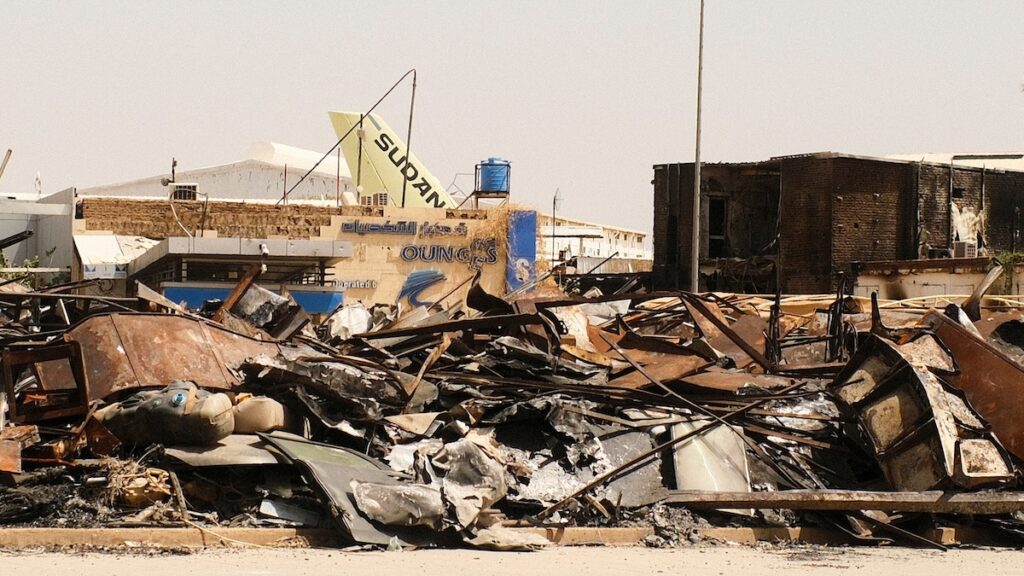
A history of Israeli intervention in Sudan
Israel has a particular history of supporting Sudanese militias, in accordance with its Periphery Doctrine to counter regional isolation and hostile Arab nationalism by building relationships with non-Arab states and minorities at the edge of the Middle East.
Israeli intelligence played a pivotal role in arming and training the south Sudanese Anyanya movement, a guerrilla army that fought the central government, by facilitating fighter training and providing essential supplies. In 2008, Israel opened an office for the Sudan Liberation Movement, a Darfur rebel group. Israel’s outreach to the group was a result of its Gaza arms smuggling concerns; officials said weapons were moving to Hamas through Sudan, and a relationship with an anti-Khartoum rebel group offered a way to surveil — and disrupt — those routes.
Beyond these interventions, Israel has long seen the African nation as a hotbed for pro-Palestine militants and a waypoint for smuggling arms — in particular, Iranian weapons — to Hamas.
WikiLeaks cables published by The Guardian show that in January 2009, U.S. officials warned Sudan to block a shipment of Iranian weapons to Gaza, likely based on Israeli intelligence. Sudanese officials were told their repeated claim that they do not allow Iranian weapons imports “would be unfortunate.”
That same month, a convoy was hit by unidentified aircraft in Sudan’s Red Sea state, drawing widespread speculation that Israel had conducted the strike to block weapons headed to Gaza. Israel’s then-Prime Minister Ehud Olmert offered a pointed non-denial: “We operate everywhere where we can hit terror infrastructure — in close places and in places further away.”
In 2011, when the United States was working to remove Sudan from its list of state sponsors of terrorism, Sudan accused Israel of trying to sabotage that process by carrying out a deadly air strike in Port Sudan, the country’s principal seaport and international trade hub. The strike reportedly killed a senior official and chief arms procurer for Hamas; his predecessor had been assassinated in a Dubai hotel the previous year by suspected Mossad agents. One senior Israeli military official told media afterward that Israel was behind the Port Sudan attack, saying, “It’s not our first time there,” but the government distanced itself from the attack.
The following year, Sudan accused Israel of attacking an ammunition factory in Sudan. Israeli officials sidestepped questions about its involvement, saying only that Sudan was “a dangerous terrorist state.” Days later, an Israeli intelligence official confirmed to NPR that the Israeli military operates within Sudan, calling the country “a playground for militants.”
What’s at stake for Sudan
None of this is happening in a vacuum. Sudan’s civil war has become a proxy arena for regional powers pursuing their own interests.
But external accountability is entirely lacking. The UAE has faced growing pressure — including from the UN Panel of Experts and members of the U.S. Congress — over arms transfers that violate an existing embargo. Israel has faced none, despite intelligence and surveillance support to a militia the U.S. government has formally determined committed genocide.
When the RSF took El Fasher in October 2025 after an 18-month siege that starved the city into submission, a UN independent fact-finding mission concluded the assault bore “the defining characteristics of genocide.” It was not “random excesses of war,” investigators concluded, but a coordinated operation targeting Sudan’s coordinated operation designed to destroy non-Arab minorities, especially the Zaghawa and the Fur ethnic groups.
The UN mission documented mass killings, sexual violence targeting Zaghawa and Fur women and girls, torture, and enforced disappearances. Survivors recalled perpetrators demanding, “Is there anyone Zaghawa among you? If we find Zaghawa, we will kill them all,” and declaring, “We want to eliminate anything black from Darfur.”
This is the militia that Israel appears to be covertly supporting.
Israel’s strategic reasoning may go deeper than hedging its bets. The national army has historically maintained ties to Palestinian factions and to so-called political Islam; meanwhile, as Middle East Eye notes, the RSF has said it will combat “radical Islamists,” described Hamas as a terrorist group, and cut the word “al-Quds” (Jerusalem) from its logo.
If the national army holds the ground still under its control, Darfur — the RSF’s home base — could harden into a permanent separation from the rest of Sudan, entrenching the militia’s rule over the region rather than ending it. By enabling the RSF, Israel and the UAE are sabotaging the possibility of a unified, stable Sudan. And as a bonus for Israel, the continued combat also weakens neighboring Egypt, which has long supported the national army.
These foreign powers have shown they will keep funding this conflict as long as it serves them, no matter how much innocent blood is spilled. Without addressing the flow of weapons, intelligence, and diplomatic cover from both Abu Dhabi and Tel Aviv, there will be no end to the violence.