
For decades, Israeli Prime Minister Benjamin Netanyahu has pushed the idea that Iran’s nuclear ambitions could only be stopped through military force. In Donald Trump, he found an American president willing to greenlight that strategy, argues veteran human rights advocate Kenneth Roth.
That strategy is now facing rare internal dissent at the highest levels of U.S. national security.
On March 17, National Counterterrorism Center Director Joe Kent resigned in protest, declaring he “cannot in good conscience support the ongoing war in Iran” and asserting that Iran posed “no imminent threat” to the United States — a striking rebuke from a sitting intelligence chief and the first major resignation over the war.
After Trump’s “success” in Venezuela, “He thought Iran would be just as easy … and so he went in and allowed Netanyahu to hoodwink him,” says Roth, who led Human Rights Watch for nearly three decades. “Israel’s top concern is just leaving Iran in chaos, destroying as much as possible, so it can’t come back as a threat.”
Roth tells Analyst News that the U.S. decision to launch strikes on Iran last month — including bombing a girl’s school and assassinating Ayatollah Ali Khamenei in the middle of negotiations with Iran over its nuclear program — was not only blatantly illegal but also weakened international legal order and likely helped trigger a renewed global race for nuclear weapons.
With the war now in its third week and no signs of a ceasefire, we spoke to Roth about the legal case against the war, how Israel and America’s attacks on Iran borrow from Israel’s playbook in Gaza, and what this conflict signals to the rest of the world: that states without nuclear deterrence are dangerously exposed.
This interview has been edited for length and clarity.
American and Israeli strikes on Iran have killed at least 1,400 people, including more than 150 schoolgirls. The U.S. government keeps changing its tune on the motivations for the attacks. What are your thoughts on all this?
I think it’s important to stress that this war of choice is a war of aggression. Under the U.N. Charter, there are only two reasons why one country can threaten or attack another: either if the U.N. Security Council authorizes it, which clearly didn’t happen here, or if there is an actual or imminent armed attack from that country, and that didn’t happen here either.
The most that we’ve collected, if you listen to Trump, is that Iran has done a lot of things in the past, but that’s not an imminent threat. The other thing that [U.S. Secretary of State] Marco Rubio said was we knew the Israelis would attack and the Iranians would respond, so we had to be preemptive. That also is obviously not a justification. None of this adds up to a legitimate reason to go to war. So this is a crime. This is pure aggression.
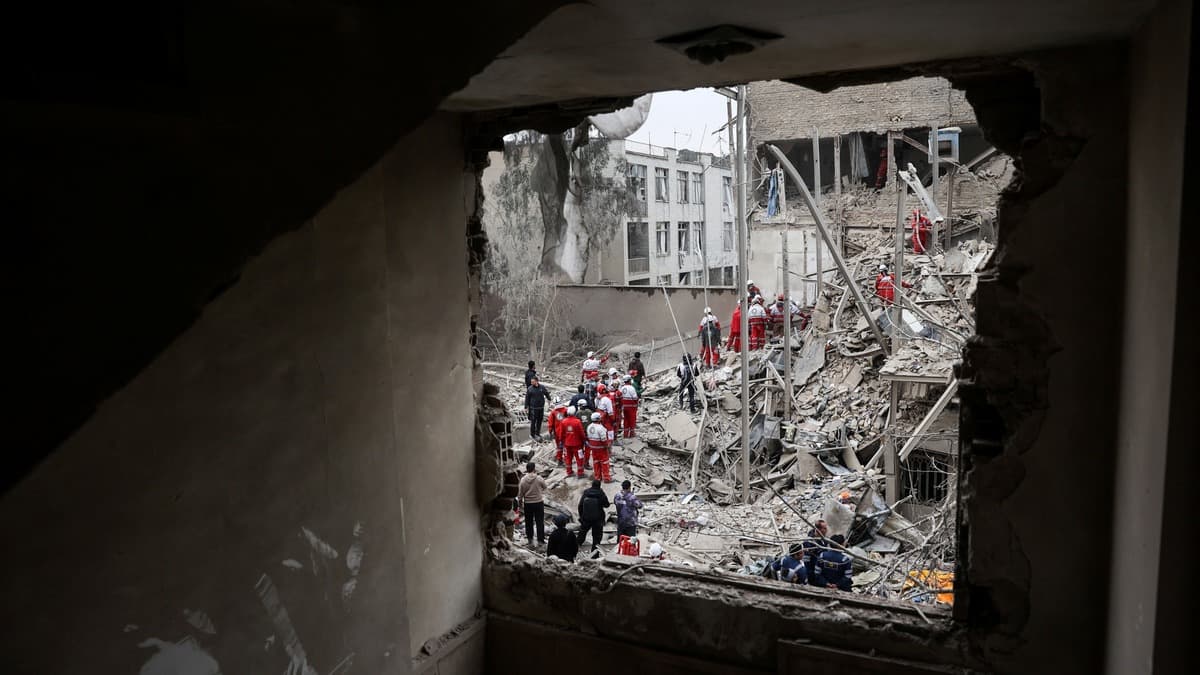
Now move to the school, and all the evidence points to the fact that this was a U.S. Tomahawk missile. Do I think the U.S. deliberately attacked the girls’ elementary school? No, but they did very precisely target that structure, and that is a war crime here. It was one of negligence in failing to determine that this building, which was next to a military base, was distinct from the military base. They just didn’t bother doing the basic homework, the basic intelligence to figure out that this was a girls’ school.
What’s worse is that there seems to have been a double-tap strike. A double-tap strike is horrible because, regardless of the appropriateness of the initial attack, and here it was clearly inappropriate, the second strike was designed to go after the rescuers.
The rescuers are humanitarian workers. They’re medical workers. These are protected people. These are civilians. They are not legitimate targets. Why did they hit a second time to try to get the rescuers?
The comparable situation is what Israel was doing in Gaza, where Israel would [repeatedly] hit shelters for displaced people. They would hit civilian facilities. The answer was always, “Oh, there was a Hamas fighter somewhere in there.”
But with no attention to the issue of proportionality, no attention to the fact that even if there is a legitimate military target, is there legitimate harm? Is the military gain sufficient to overcome the civilian harm? And over and over again, in Israel’s case, the answer was no. So that was condemned appropriately.
Why is the U.S. not being condemned here? So far, at least, it’s not a pattern for the U.S. It does seem to have been a mistake.
[But] a mistake is not a good enough answer. Why was there such a gross intelligence failure when any serious scrutiny would have revealed this to be a girl’s elementary school? That’s not a secret. The girls come and go every day. So why didn’t they look? That’s the real question that needs to be asked.
At times, we’re told this war is about women’s rights, or about human rights, or to save the protesters. At other times, we’re told it’s about regime change or Iran’s nuclear program. What are the true motives of this war?
It’s very hard to say what the true motives are. Clearly, Netanyahu and Trump are facing difficult electoral circumstances. I think they both hoped to boost their electoral prospects. Trump has the added problem of these Epstein files being released and beginning to implicate him personally. You go to war to avoid a sex scandal.
The nuclear negotiations do get to the heart of the matter. That was supposedly the real reason for going to war. Iran had said over and over that they’re not going to have a nuclear bomb, and they were completely willing to have intrusive inspections to avoid that.
The real issue was coming down to nuclear enrichment. And Iran said this for years: We should be able to enrich. Everybody else has a right to enrich; why should we be treated differently? We’re willing to accept limits on that enrichment.
That’s where I understand the negotiations were. They would dilute the highly enriched uranium they had. They would restrict further enrichment, either stopping it altogether for a temporal period or perhaps limiting it to the kind of very minimalistic enrichment used for medical or scientific isotopes.
These were things that were on the table. But clearly, you don’t just bomb in the middle of negotiations that seem to be going someplace, if you want a non-military solution.
I just think Trump didn’t want a non-military solution. He had built up this armada. He couldn’t keep it there forever. It was expensive. He had a success, in his view, in Venezuela. He thought Iran would be just as easy. Clearly, utterly naive — but he surrounds himself with sycophants who don’t tell him the truth.
“Trump allowed Netanyahu to hoodwink him, because Netanyahu for decades has wanted to bomb Iran. And Trump, who is not the most sophisticated guy, allowed himself to be persuaded that this would be easy.”
And so he went in and allowed Netanyahu to hoodwink him, because Netanyahu, for decades, has wanted to bomb Iran. He hasn’t wanted a negotiated solution. And Trump, who is not the most sophisticated guy in these matters, allowed himself to be persuaded that this would be easy, that this was necessary, it was worth doing, and here we are. We have a war of choice with enormous costs for the people of Iran.
Israel’s top concern is just leaving Iran in chaos, destroying as much as possible, so it can’t come back as a threat. Down the road, that callousness should not be governing U.S. policy.
And we’ve already seen this difference of opinion in Syria. Israel’s policy has been just to foment chaos, to bomb away, to try to create a separatist southern part of Syria, just to keep it as disheveled as possible. The U.S government has said, “Let’s give al-Shara a chance, even though he’s got an Islamist background.” So the U.S. has actually been supportive of a centralized Syria, against Israel’s wishes.
I would hope that something like that prevails in Iran as well, and that Trump just says no to Netanyahu’s effort to cause as much havoc and destruction as possible.
Iran clearly didn’t have a nuclear weapon, and yet it was attacked. In response, France said it would expand its nuclear arsenal and Finland said it would be prepared to host nuclear weapons on its territory. Have American and Israeli actions sped up nuclear proliferation?
I think that’s entirely possible. People have asked why North Korea was not attacked when it has nuclear weapons, and Iran was attacked when it didn’t have nuclear weapons. So this is going to be an unfortunate incentive to develop nuclear weapons.
We have to remember that development doesn’t have to be from scratch. You can buy nuclear weapons in the right circumstances. A country like Pakistan could be persuaded to sell a nuclear weapon. North Korea, desperate for money at some point, could be just persuaded to sell one. This is not a message that one wants sent.
What is the risk of nuclear weapons being used to end this war?
I don’t think there’s any possibility that the U.S. or Israel are going to use a nuclear weapon. Israel might use a nuclear weapon if it were about to be defeated. It’s nowhere near defeat. So I don’t think that’s a realistic prospect.
Trump gave an interview saying there are no more targets left. Now, if that’s true, then this becomes gratuitous bombing, gratuitous destruction. That’s a war crime under the Geneva Conventions. So I would hope that Trump sees the logic of what he’s saying and stops in the meantime.
Iran is trying to pursue a kind of classic indirect form of warfare, which is what one does when you’re the weaker military party, and it is attacking the Gulf Arab states, causing them real economic pain. And so if the price of oil continues to skyrocket, that hits at Trump’s weak point.
He is already in trouble with the forthcoming midterm elections, because he doesn’t have much to deliver for the American people. The tariffs have increased inflation but have not increased manufacturing jobs. The affordability crisis is getting worse, and so if suddenly people have to pay double the price they used to pay for just filling up a tank of gas, this is going to be a problem for Republicans in the midterm. Trump is aware of that.
At this stage, Iran’s main strategy [is] to try to force Trump to end this thing.
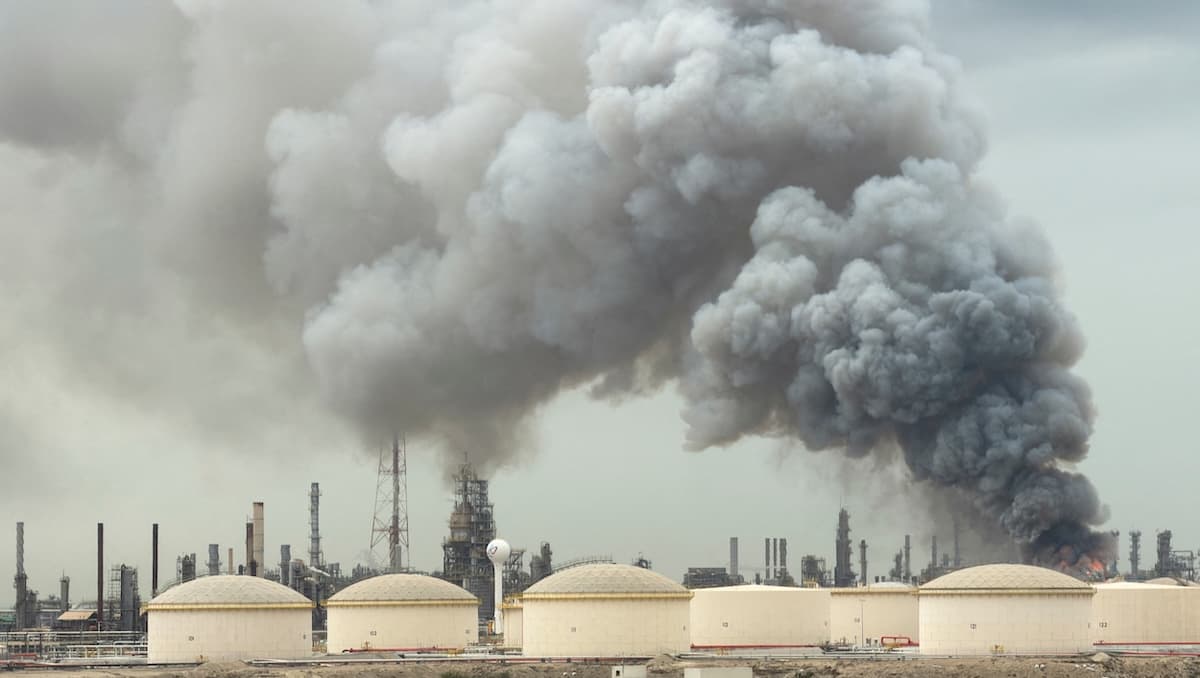
We saw apocalyptic scenes in Iran when Israel bombed its oil facilities, causing thick black smog to fill the skies in Tehran. Are oil refineries a legitimate target?
Oil facilities could be a legitimate military target because they’re a major source of revenue for a long war. Ukraine is attacking similar facilities in Russia and vice versa.
[But] nobody thinks this is going to be a long war. Nobody thinks that Iran has any capacity to replenish its military in the course of this war. So the idea that you’re attacking its revenue source does not provide the kind of concrete, direct military advantage that would turn the oil facilities into a legitimate military target. This should not have been hit, period.
Even if it was a legitimate military target, which it wasn’t, you still have to do the proportionality test. Is the military advantage sufficient to justify the civilian harm? And in this case, where all of Tehran is polluted by this toxic cloud, you’re clearly going to have people across this huge city being sick. It’s really hard to justify this in proportionality terms.
How do you see this war ending?
I don’t think a formal agreement is in the cards right now, because why would Iran trust Trump when he just rips up agreements? But I think that there is a significant incentive for Trump to just stop. At some point, he can declare victory.
I don’t see Iran continuing to launch missiles. That would not be in its interest to resume the bombing. So I think this may end just through a de facto ceasefire, even if there isn’t a formal agreement, and hopefully sooner rather than later.