
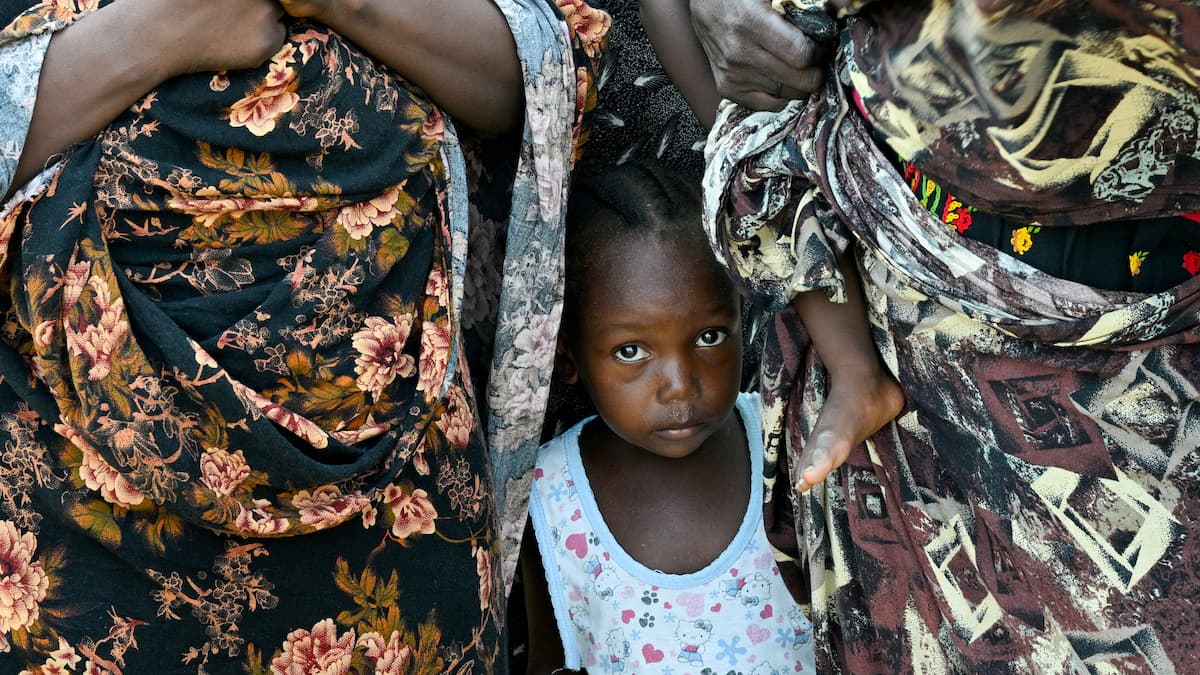
When the war broke out in Sudan in April 2023, Salma Hassan and her four children managed to escape the bombings and fire in Khartoum and found refuge in an elementary school-turned-emergency shelter 200 kilometers away in Shendi. But the school administration has since asked the family to leave so they can use the classrooms.
From his apartment in New York, Hassan’s brother Sultan launched a crowdfunding campaign to evacuate his family members to find stability and safety in Rwanda. So far, he’s raised close to $7,000 toward this goal.
Since the start of the war, many Sudanese have been relying upon online crowdfunding campaigns to resolve their urgent needs and financial issues. With the U.S. freezing humanitarian aid to Sudan, leading to about 80% of the country’s emergency communal kitchens closing and leaving millions of Sudanese even more vulnerable, these crowdfunding campaigns have taken on even more importance.
The goals vary from raising funds to finish their higher education abroad; establishing pantries that provide free meals for hunger; rescuing animals left behind stranded in a zoo; supporting hospitals; rebuilding destroyed homes; and evacuating family members outside the country.
In Sudan’s deeply collective culture, helping those in need and standing with them during difficulties has always been considered the norm. These online campaigns build on this foundation, expanding the number of participants and enabling the diaspora to take part.
The most commonly used crowdfunding platform is GoFundMe: The platform currently hosts more than 500 campaigns that started after the eruption of the war. Muslim crowdfunding platform LaunchGood has raised more than $1 million for Sudan-related campaigns. Donation platforms such as Chuffed are also used; others directly collect donations from supporters by posting a case description on social media along with a link to a bank account. In a few cases, members of the Sudanese diaspora have successfully used Facebook’s built-in donation feature to raise funds.
But even as it enables new forms of solidarity and aid, online crowdfunding remains an uphill battle.
Sudan is not on the list of supported countries for many popular crowdfunding platforms such as GoFundMe. While GoFundMe does allow users in supported countries to accept donations for campaigns related to Sudan, users cannot send collected funds directly to Sudan. Instead, users are required to go through several verification steps to withdraw the money before transferring them to the beneficiary in Sudan on their own. With many cases relating to urgent, time-sensitive needs – such as medical treatments or tuition payments — this lengthy process can present a serious barrier.
Given the dire humanitarian crisis in Sudan, advocates have also called upon these crowdfunding platforms to reduce their fees to decrease the financial barrier for starting fundraising efforts.
The prevalence of scammers also undermines the credibility of online funding campaigns, causing many would-be donors to be skeptical of authentic campaigns. In June 2019, investigations by The Atlantic and BBC exposed a wide network of fake Instagram accounts, with hundreds of thousands of followers, that exploited people by falsely claiming they would offer donations to Sudanese children with food and shelter for each click or follow.
The goal of these scam accounts? Gaining followers, then cashing in on them through advertisements and sponsorships. “What I am obtaining is followers and exposure,” @SudanMealProject told The Atlantic bluntly.
To combat these challenges and help raise funds securely and efficiently, the Sudanese community and crowdfunding platforms have mobilized.
Activists and grassroots advocacy groups have been sharing tips on how to donate effectively and creating lists of vetted campaigns and legitimate organizations working to help Sudan’s most vulnerable. A few of these initiatives — supporting Emergency Response Rooms, war relief organizations, meal distributions, medical care and more, both in Sudan and among refugee communities — are listed below:
- Sudanese Red Crescent Society
- Sudan Solidarity Collective
- Sudanese American Physicians Association
- Darfur Women Action Group
- Sadagaat-USA
- Barana Hanabneiho
- Hadhreen
GoFundMe, too, has dedicated a page to Sudan that provides instructions on how to help in addition to providing an updated list of verified accounts that donors can trust. At press time, however, this page lists just six campaigns — a mere drop in the bucket considering the extent of destruction and violence wrecking Sudan.
Despite the shocking numbers and images emerging from the country, drawing attention to Sudan’s humanitarian crisis has already been difficult. “It’s not so much the question of whether the genocide is happening,” Hager Ali, a research fellow at the German Institute of Global and Area Studies, told Analyst News last year. “It’s more a question of coverage and attention to that.”