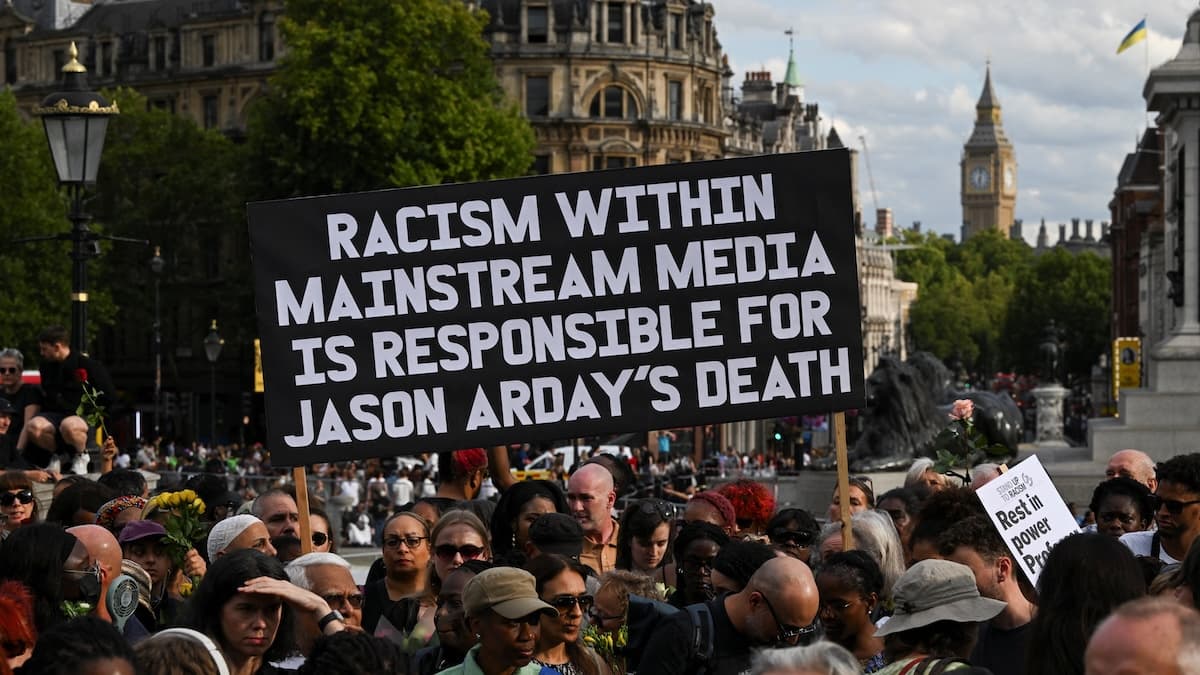

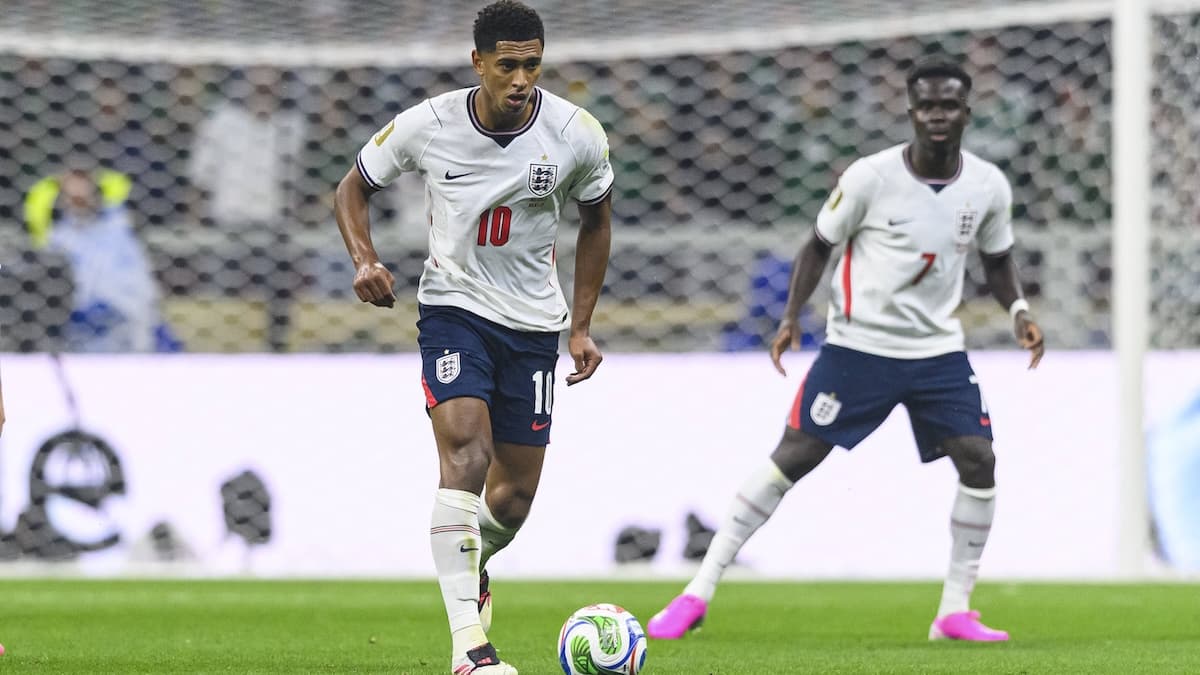
Jude Bellingham, an England footballer of Jamaican heritage, has been a major story of this World Cup. With six goals so far and stadiums full of England fans breaking into a “Hey Jude” singalong after every win, he has almost single handedly carried England to the semi-finals. Even Rupert Lowe, the far-right MP who leads Restore Britain and wants immigrants kicked out of the country, couldn’t resist posting his name in celebration — an X post that was immediately filled with replies from his own supporters calling for Bellingham’s deportation.
That contradiction is the story of this World Cup. The United States and several European countries are tightening their borders and escalating anti-immigrant rhetoric, even as their national teams are built on the very players those policies target.
Look closely at the team sheets and you’ll see that many of the strongest sides simply could not exist without immigrants and the children of immigrants. Only eight squads playing in this World Cup have no foreign-born players.
In victory, immigrant players are embraced as national heroes, symbols of pride and unity. In defeat, they become targets of vicious racist abuse. Their place is conditional. Mesut Özil, who resigned from the German national team in 2018 citing “racism and disrespect” over his Turkish heritage, put it best: “I am German when we win, but I am an immigrant when we lose.”
Nations want the rewards of immigration — fielding a semi-decent football team among them — while scapegoating immigrants for problems that have nothing to do with immigration and everything to do with wealth inequality, exploitative and extractive capitalism, and a political class captured by corporate money.
A tournament built on migration
Almost a quarter of the players in this World Cup were born in a country different from the one they represent — the highest share in the tournament’s history, up from 16.8% in Qatar in 2022.
Cue the usual complaint: immigrants are “stealing jobs,” even in football, and “this wouldn’t have happened in the good old days.” Except migration has been part of the World Cup since its inception. In 1938, over 12% of players represented a country other than their birth country, and in 11 of 23 tournaments since 1930, foreign-born players have made up more than 10% of the field.
“I am German when we win, but I am an immigrant when we lose.”
Foreign-born players are only half the story. Many squads also include the children and grandchildren of immigrants — among them U.S. star Folarin Balogun, who scored twice in America’s opener against Paraguay. Balogun is the same player Trump pressed FIFA president Gianni Infantino to reinstate after a red card in the Belgium match — and the same player who wouldn’t be eligible to play for the United States under Trump’s plan to scrap birthright citizenship. His Nigerian parents were actually visiting the U.S. when his mother gave birth to him.
So Trump, in both rhetoric and action, does everything possible to demonize and expel immigrants, while personally intervening to reverse a red-card decision for a player his own immigration policy would bar from the team. The Supreme Court overturned that order, but hard-right Americans still push to end birthright citizenship. Follow that policy to its logical end, and the U.S. starting eleven against Australia would have had only six eligible players.
Cheered in victory, abused in defeat
When the Netherlands lost to Morocco on penalties, the online reaction was a flood of racist abuse aimed at three Black players: Justin Kluivert, Quinten Timber and Crysencio Summerville. Dutch Prime Minister Rob Jetten summed it up: “One moment they are ‘our boys,’ and we don’t see their color when they are wearing an orange shirt. Then when someone misses a penalty, vitriol pours out from every corner.”
FIFA’s Social Media Protection Service logged 89,000 abusive posts during the group stage alone — a thirteenfold increase from Qatar in 2022 — with 11% racially motivated, up three points from 2022.
“One moment they are ‘our boys,’ and we don’t see their color when they are wearing an orange shirt. Then when someone misses a penalty, vitriol pours out from every corner.”
This kind of abuse isn’t confined to the World Cup. Marcus Rashford, Jadon Sancho and Bukayo Saka faced a torrent of racist abuse after England’s Euro 2020 final loss to Italy on penalties. Former U.K. Prime Minister Boris Johnson told the abusers, “Shame on you, and I hope you will crawl back under the rock from which you emerged” — the same Boris Johnson infamous for saying women in burkas “look like letter boxes.”
The abuse hasn’t crawled back anywhere. It’s increasing, in step with the anti-immigrant rhetoric spreading across the U.S. and Europe.
A lesson on the enduring legacy of colonialism
The U.K. has its own version of this politics, in the rise of Reform UK and Restore Britain. Reform wants to rewrite the history curriculum around “patriotic” classes and “national pride.” Suella Braverman, Reform’s education spokesperson, blames a “substandard curriculum that undermines academic rigour and national identity in favour of promoting their mass migration agenda” — this from a government whose own curriculum barely engages with the legacy of British colonialism, from Palestine to Sudan to Myanmar.
The World Cup tells that history better than any classroom could. Twelve of the 23 players on France’s 2018 World Cup-winning squad had African parents — not evidence of a “mass migration agenda,” but the direct legacy of France’s colonial and post-colonial ties to North and West Africa.
Nor is this politics confined to the right. Keir Starmer warned that Britain risked becoming “an island of strangers, not a nation that walks forward together” — a reminder that anti-immigrant rhetoric in the U.K. is now a cross-party consensus.
This is the question the World Cup keeps forcing into view, one most countries would rather avoid: Strip out the immigrants and their children, and how much of the team is left on the pitch?